Everything You Need to Know About Herpes Zoster
Those who have never suffered from herpes zoster cannot fathom its severity; however, anyone who has experienced the associated neuropathic pain is left with memories so vivid they strike fear into the heart.
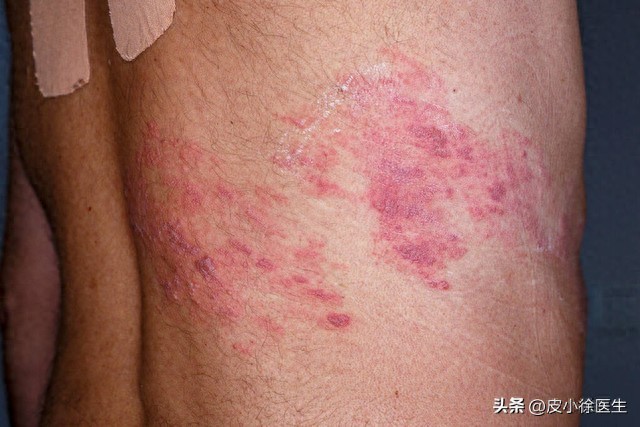
The condition commonly known in folk medicine as "Snake-Girdle" or "Coiling Dragon" is what we refer to as Herpes Zoster (shingles). It is caused by the reactivation of the varicella-zoster virus (VZV) latent within the nerve ganglia when the body's immunity decreases due to various reasons. It is characterized by erythematous papules and vesicles distributed unilaterally along a dermatome, accompanied by varying degrees of pain or pruritus.
Generally speaking, middle-aged and elderly people over the age of 50 are susceptible to herpes zoster. Other high-risk groups include those who frequently stay up late and lack sleep, experience high psychological stress, suffer from overfatigue, have autoimmune diseases, are physically frail or chronically ill, or are recovering from trauma or surgery. In short, as long as you are exhausted and your immunity declines, it is possible to contract herpes zoster. It can occur in children and young adults, but it is more common in the middle-aged and elderly; therefore, herpes zoster must be taken seriously.
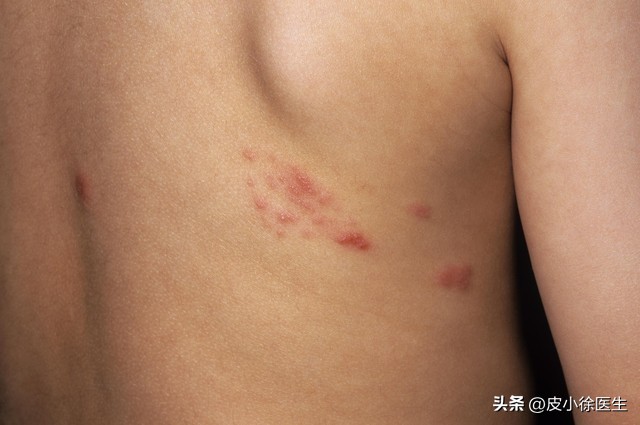
The vast majority of people develop immunity after having herpes zoster once in their lifetime; however, a small portion of the population may experience it twice, and a very small minority may experience it three times. Recurrence is likely related to defects in the body's immune function; there is no need for excessive anxiety, as active treatment during an outbreak is sufficient. Furthermore, do not be overly concerned about the contagiousness of herpes zoster, as its infectivity is very weak. Only in rare circumstances, through close contact, might it cause varicella (chickenpox) in children or adolescents who have never had the virus, rather than causing herpes zoster itself.
Typical herpes zoster presents as clusters of papules and vesicles on an erythematous base, distributed along a dermatome and accompanied by pain. The so-called dermatomal distribution refers to areas along a unilateral nerve: on the face, it does not cross the nose or the glabella; on the chest and abdomen, it does not cross the midline; on the back, it does not cross the spine; and on the arms and legs, it occurs unilaterally. Herpes zoster can range from mild to severe. Mild cases may only involve a few papules and vesicles with minimal pain. Severe cases can involve extensive erythema, papules, and vesicles accompanied by excruciating pain that makes eating and sleeping impossible, causing profound suffering. Furthermore, herpes zoster in specific locations can present with unique manifestations: for instance, herpes zoster of the head and face may be accompanied by severe dizziness, nausea, vomiting, or even facial paralysis; herpes zoster on the abdomen may lead to abdominal distension or constipation; perineal involvement may affect urination and defecation; and herpes zoster on the legs can result in difficulty walking.
What should be done once herpes zoster appears? Within 72 hours of the onset of the rash—the earlier, the better—one should take a full dose and complete course of regular oral antiviral medications, such as valacyclovir, famciclovir, acyclovir, or the newer antiviral drug brivudine. This should be combined with neurotrophic agents like mecobalamin and vitamin B1, along with analgesic medications such as pregabalin or gabapentin. For topical treatment, penciclovir cream or acyclovir cream can be applied for antiviral effects; if a secondary bacterial infection occurs, mupirocin ointment can be added for anti-infective treatment. As for whether a short course of oral glucocorticoids is necessary, it is recommended to consider this at the physician's discretion.
There is a frustrating reality: even with such sufficient pharmacological intervention, a small proportion of elderly patients will still be left with postherpetic neuralgia (PHN). This condition is highly challenging and requires intervention from multiple departments, including dermatology, pain management, traditional Chinese medicine, geriatrics, and rehabilitation. However, early, proactive, and full-dose antiviral treatment can effectively reduce the incidence of postherpetic neuralgia.
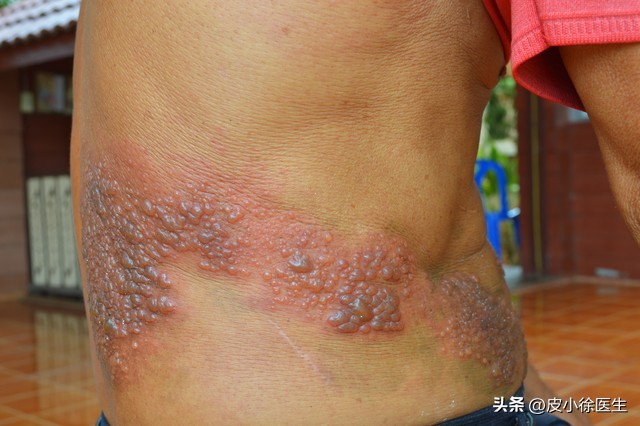
Fortunately, shingles vaccines are already available on the market. Middle-aged and elderly individuals over the age of 50 are particularly susceptible to herpes zoster. Therefore, timely vaccination with the recombinant zoster vaccine offers an efficacy rate of up to 97% in preventing shingles, with protection lasting for as long as 11 years. This can effectively prevent the occurrence of herpes zoster and reduce the incidence of postherpetic neuralgia (PHN).