Diagnosing Herpes Zoster: What Tests Are Required?
The diagnosis of herpes zoster generally does not require specific laboratory tests. A definitive diagnosis can typically be made upon observing unilateral erythematous papules and vesicles distributed along a nerve segment (dermatome), accompanied by pain or pruritus. However, there are special circumstances—both prior to and following confirmation—where further investigation may be necessary.

Prior to confirmation: Before the appearance of papules and vesicles, some patients experience localized severe pain. For instance, if pain occurs in the left anterior chest, it is necessary to rule out the risk of angina pectoris or myocardial infarction, as well as intercostal neuralgia. This may require an electrocardiogram (ECG), chest X-ray, or even coronary angiography in elderly hospitalized patients. Similarly, if there is unilateral headache, clinicians must differentiate it from migraine, intracranial lesions, or cervical spondylosis, which may necessitate cranial CT, MRI, cervical spine X-rays, or neurological examinations. In cases of lower extremity pain, it is important to investigate potential sciatica or lumbar disc herniation, requiring tests such as a lumbar spine MRI. Furthermore, for herpes zoster in the perineal region presenting with pain or blistering, it must be differentiated from genital herpes; this may involve herpes simplex virus (HSV) antibody testing, as well as gynecological or urological examinations.
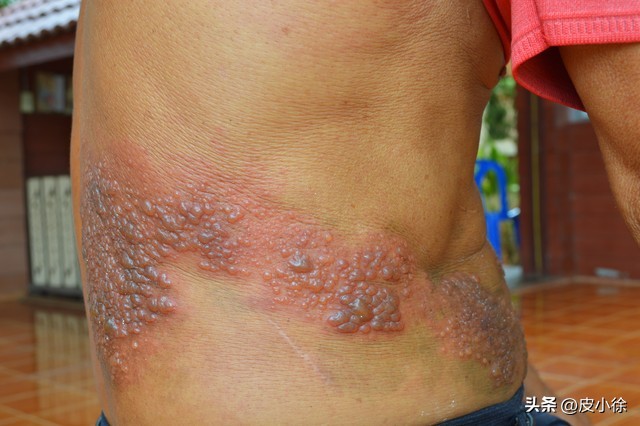
After diagnosis. Once typical herpes zoster (shingles) has appeared, special examinations are generally not required. However, there are exceptions. For example, in cases of herpes zoster involving the head and face, if the eyes are affected—presenting with redness, swelling, or even blurred vision—relevant ophthalmological examinations are necessary. If the external auditory canal is involved and unilateral facial paralysis occurs, a neurological examination is also required. In very rare cases, herpes zoster of the head and face can involve the intracranial space; this is severe and necessitates further diagnostic testing. Some cases of herpes zoster on the abdomen can lead to abdominal distension and constipation, potentially causing gastrointestinal flatulence, which requires a consultation and examination in the gastroenterology department. Another extreme scenario involves elderly patients with herpes zoster on the left chest who concurrently develop angina pectoris or myocardial infarction; this requires high vigilance and a consultation with the cardiology department.
In summary, typical herpes zoster can be clearly diagnosed upon visual inspection. However, if pain occurs in the relevant area before the rash appears, a series of screenings by relevant departments may be necessary. After the vesicles appear, relevant examinations should also be conducted based on the associated symptoms.

Sometimes herpes zoster appears simple, yet the diagnosis can be quite difficult. Once the rash has appeared, completely eradicating the pain requires more time, energy, and medication. Therefore, for individuals over the age of 50, if financial conditions permit, considering the herpes zoster vaccine is highly necessary.