Does cervical erosion really need treatment? 90% of the money spent is wasted, and only these 2 conditions truly require treatment
Doctor, I have third-degree cervical erosion! Is it very serious? Do I need surgery? Every day in the clinic, I encounter women frightened by the term "erosion" — some spend thousands on laser or cryotherapy, others use "anti-inflammatory suppositories" long-term, and some even worry about cancer, losing sleep all night. Today, as a gynecologist with 12 years of experience, I want to clearly tell you:Cervical erosion is not a disease, and in 90% of cases, it does not require treatment at all! What truly needs to be addressed are the underlying causes hidden behind it.After reading this, you will never be tricked into wasting money again.

First, let me put your mind at ease: 32-year-old Sister Li was diagnosed with "second-degree cervical erosion" and was so frightened that she wanted to undergo surgery. However, her TCT and HPV results were completely normal. I advised her not to treat it and simply schedule regular follow-ups. Three years have passed, and she has had no issues at all. Meanwhile, 28-year-old Xiao Zhang had "third-degree cervical erosion" along with blood in her vaginal discharge. Further examination revealed cervicitis, and after two weeks of medication, her condition improved significantly. This shows that "erosion" is merely a superficial appearance, and whether treatment is necessary depends on "whether there is an underlying cause."
First, understand: cervical erosion is actually a "physiological phenomenon," not a "disease."
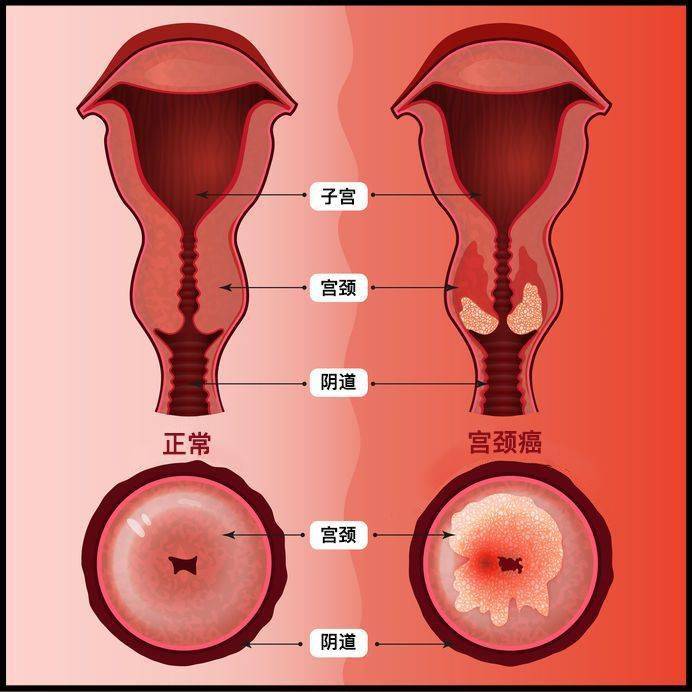
Many people are misled by the term "erosion," thinking it means the cervix is rotting—this is completely wrong! Cervical erosion has long been renamed in medicine as "cervical columnar ectopy," and its essence is:
- The cervix has two types of epithelial cells: the squamous epithelium on the vaginal side (smooth) and the columnar epithelium inside the cervical canal (red, granular).
- Influenced by estrogen (such as during puberty, pregnancy, or oral contraceptive use), the columnar epithelium may shift outward, exposing a reddish area that appears as "erosion." However, this is a normal physiological change, akin to "the cervix changing its appearance," and is not a pathological condition at all.
Core conclusion: Simple cervical erosion without symptoms and with normal examination results is like having a mole on the face; it requires no intervention and will not develop into cancer
II. Judgment by Situation: Treatment is only necessary in these two specific cases.
Erosion itself does not require treatment, but if it is accompanied by underlying issues, targeted management is necessary—treat the cause, not the erosion.
- Situation 1: Complicated by cervicitis with obvious symptoms
- Typical manifestations: increased vaginal discharge, yellowish color, foul odor, or postcoital bleeding, vulvar itching;
- Why treat: These symptoms are caused by cervicitis, not the erosion itself. Without treatment, discomfort may recur and pelvic inflammatory disease could develop.
- Treatment method: Perform a routine vaginal discharge examination to identify the type of inflammation. Use metronidazole for bacterial inflammation and clotrimazole for fungal infections. Surgery is not required. Standardized medication for 1-2 weeks can lead to improvement. Xiao Zhang's case is exactly like this; after medication, the symptoms disappeared, and the "erosion" did not affect her health.
- Case 2: Abnormal TCT/HPV Test Results (Hidden Lesions)
- Typical presentation: TCT indicates "atypical squamous cells," or high-risk HPV positive (especially types 16 and 18).
- Why treat: This may be a signal of cervical lesions; "erosion" is merely a coincidental manifestation, and without intervention, it may progress to precancerous lesions.
- Treatment approach: Proceed with colposcopy + biopsy. If low-grade lesions are indicated, follow up with regular monitoring; if high-grade lesions are indicated, perform LEEP or conization surgery to remove the lesion tissue — but this treats the "lesion," not the "erosion."
III. Pitfall Avoidance Guide: These 3 Misconceptions, Do Not Fall For!
- The more severe the degree of cervical erosion, the more necessary it is to treat it.Wrong! First degree, second degree, and third degree only refer to the area size of columnar epithelial ectopy and are not related to the severity of the condition; third degree may also be a normal physiological phenomenon.
- Laser and cryotherapy can cure erosionWrong! Surgery can damage the normal tissue of the cervix and may also affect cervical function especially in women planning pregnancy. Performing surgery for simple erosion is purely a waste of money and harmful to the body.
- Cervical erosion can develop into cancer.Wrong! The primary cause of cancerous changes is persistent infection with high-risk HPV, which is unrelated to erosion itself. Without HPV infection, even the most severe "erosion" will not lead to cancer.
IV. Doctor's Advice: For Cervical Health, Doing These 2 Things Is Enough
- Regular screening is more important than treatment.For women aged 21-65, undergo TCT screening every 3 years, or HPV+TCT screening every 5 years. As long as the screening results are normal, there is no need to panic even if there is "erosion."
- Seek prompt examination when symptoms appear, and avoid self-medication without professional guidance.If abnormal vaginal discharge or postcoital bleeding occurs, first undergo examinations to clarify the cause, then receive targeted treatment. Do not self-medicate with "anti-inflammatory suppositories" or "erosion ointments."
Finally, I want to say to you:
Cervical erosion is not a disease but merely a normal change in the appearance of the cervix. Do not be intimidated by the name or misled by unscrupulous institutions into undergoing excessive treatment. The real threats to cervical health are hidden inflammation and HPV infection. By maintaining regular screenings and seeking timely medical attention when symptoms arise, you can effectively protect your cervical health.