What is the relationship between viruses and cervical cancer? Doctor: 99% of cervical cancers are related to this virus
"Doctor, I’m infected with HPV — will I soon get cervical cancer?" In the clinic every day I meet women terrified by the association of "virus" and "cancer" — many, upon hearing "viral infection," immediately think "terminal disease," not realizing that not all viruses are carcinogenic and infection does not inevitably lead to cancer. Today, as a gynecologist, I’ll lay out the truth at once: 99% of cervical cancers are associated with "high-risk HPV," but infection ≠ cancer. Two major steps are required in between: "persistent infection" and "cellular abnormalities." Read this and you’ll understand and stop panicking.

First, a reassurance: 35-year-old Sister Wang tested HPV16 positive (high-risk) and was so frightened she lost sleep for a week; her TCT was normal, and following my plan of "boost immunity + regular follow-up," she cleared the infection after 1 year; while 48-year-old Aunt Li was HPV18 positive for 4 years, did not undergo standard screening, and was eventually found to have high-grade cervical lesions — fortunately she had timely surgical intervention and it did not progress to cancer. This shows that the relationship between the virus and cervical cancer hinges on "whether the infection is persistent" and "whether timely intervention occurs."
1. Core truth: The "culprit" of cervical cancer is high-risk HPV virus
Not all viruses can cause cervical cancer; only "high-risk HPV" is the real "culprit":
This virus is called "human papillomavirus (HPV)"; there are more than 200 subtypes in the family, divided into "high-risk" and "low-risk":
High-risk (types 16, 18, 52, 33, etc.): like "latent carcinogenic assassins," they can reside in the cervix long-term and may stimulate cellular malignant transformation, leading to cervical cancer, vaginal cancer, etc.;
Low-risk (types 6, 11, etc.): like "harmless small-time thugs," they only cause condyloma acuminatum (genital warts) and are not carcinogenic.
Clinical data confirm: 70% of cervical cancers worldwide are related to HPV types 16 and 18; the remaining 30% are mostly caused by other high-risk HPV types such as 52, 33, and 58. Without high-risk HPV infection, cervical cancer is almost never developed.
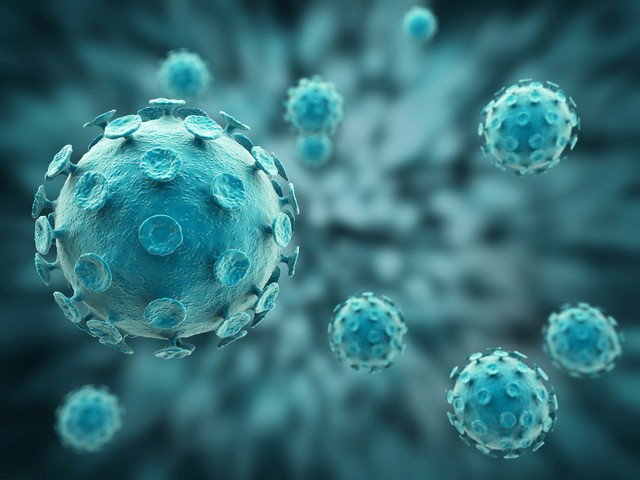
2. How does the virus lead to cervical cancer step by step? Just 4 steps, each of which can be interrupted
The development of cervical cancer is not a “sudden onset,” but a stepwise process of high-risk HPV “advancing step by step,” taking 5–10 years in total, with each step being amenable to intervention:
Step 1: Infection with high-risk HPV: mainly transmitted through sexual activity (rare indirect transmission, such as contaminated towels); the virus enters cervical cells and “lies dormant,” at which time there are no symptoms and TCT screening is normal;
Step 2: Persistent infection lasting more than 2 years: poor immunity and repeated reinfection prevent viral clearance, leading to continuous stimulation of cervical cells — this is the most critical step. 80% of people can clear the infection by immunity within 1–2 years after infection; only 20% develop persistent infection;
Step 3: Cervical cellular abnormalities: the virus continuously damages cellular DNA, first causing "low-grade lesions" (mild cellular abnormalities), then progressing to "high-grade lesions" (precancerous lesions);
Step 4: Progression to cervical cancer: if high-grade lesions are not treated in time, the cells will continue to undergo malignant transformation, eventually forming cervical cancer.
In simple terms: the virus is the "carcinogenic key," persistent infection is the "unlocking action," cellular abnormality is the "breaking in," and cancer is the "final result," but each step can be intercepted in advance.
3. Avoid 3 misconceptions; correctly understand the relationship between the virus and cervical cancer
"Infection with high-risk HPV = inevitable cervical cancer" → wrong! It is only "a carcinogenic risk," with a probability under 0.1%; the vast majority of people can clear it with their immune system, so there is no need for excessive panic;
"Not having sexual intercourse means you won't get HPV" → Wrong! A few cases can be transmitted indirectly (e.g., public toilets, towels), but the probability is extremely low; sexual activity is the main route of infection;
"Getting vaccinated means you won't get infected" → Wrong! Vaccines cover the major high-risk types (e.g., the bivalent covers types 16 and 18) but do not cover them all, so regular screening is still necessary.
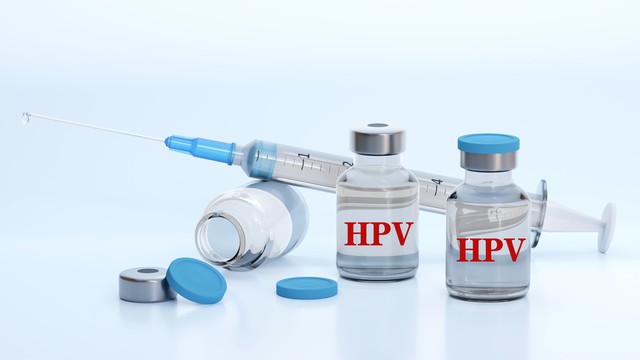
4. Three "anti-cancer actions" to interrupt the virus-to-cancer chain
As a gynecologist, I emphasize these three points every day; they are simple and practical and can maximally prevent virus-induced carcinogenesis:
Get the HPV vaccine, the most effective "preventive shot": women aged 9–45 can be vaccinated; the bivalent, quadrivalent, and nonavalent vaccines all cover the core oncogenic types (16 and 18). The earlier you vaccinate the earlier the protection—vaccination is effective even if sexual activity has already begun;
Regular screening to detect the “latent virus”: TCT every 2 years for ages 21–29; HPV+TCT every 1–3 years after age 30. Even if infected, persistent infection and cellular abnormalities can be detected in time;
Boost immunity so the virus “leaves on its own”: sleep 7–8 hours daily, reduce intake of high-sugar and fried foods, brisk walking 3 times a week (30 minutes each session), quit smoking and drinking, and avoid multiple sexual partners (to reduce cross-infection).
Finally, I want to tell you:
The relationship between viruses and cervical cancer is not “infection equals cancer,” but “persistent infection + neglected intervention” leads to cancer. High-risk HPV is not terrifying; ignorance and neglect are — it is not a “death sentence,” but an alarm reminding you to “take cervical health seriously.”
If you are currently anxious holding an HPV-positive report, don’t panic. First clarify the genotype and the TCT result, and tomorrow take the report to a reputable hospital gynecology clinic for consultation — the doctor will help you develop a personalized plan. Your attention and scientific response are the best weapons to block cancer!
Remember: cervical cancer is the only cancer that can be prevented by vaccine and detected early by screening. As long as you do “vaccination + regular screening,” you can keep the virus outside the door and keep cancer far away!