Once this color Doppler ultrasound index exceeds 1.3 cm, it indicates that complications of cirrhosis are not far away.
Liver color Doppler ultrasound is a routine examination for patients with liver diseases. As a non-invasive and radiation-free imaging test, it provides a direct understanding of the liver's morphology, portal vein width, spleen size, blood flow conditions, and more. Among these, one aspect requires our special attention: the portal vein width.
In healthy adults, the portal vein width normally does not exceed 1.3 cm. If the portal vein width exceeds 1.3 cm, it indicates the presence of portal hypertension, which suggests a serious liver condition—cirrhosis—and that its complications may not be far off.
Patients with cirrhosis often experience portal hypertension, which can lead to complications such as ascites, splenomegaly, and esophageal or gastric varices.
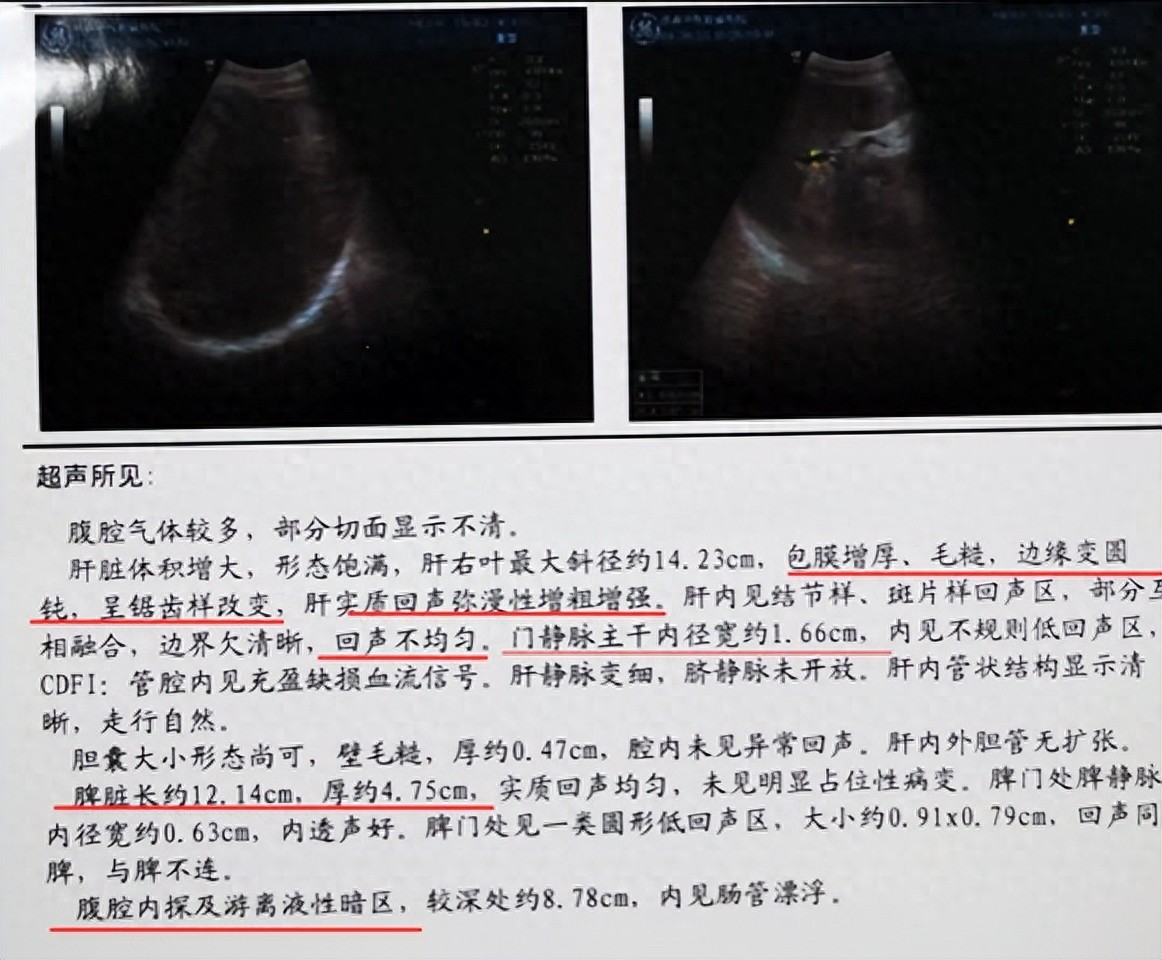
1. Ascites: After the liver becomes cirrhotic, impaired blood flow back to the liver leads to widening of the portal vein, resulting in portal hypertension. Increased vascular permeability allows large amounts of fluid and nutrients to enter the abdominal cavity, forming ascites. If not treated promptly, patients may develop refractory ascites, severely affecting their daily lives.
2. Splenomegaly: Portal hypertension causes the splenic vein to open, allowing a large volume of blood to enter the spleen and leading to congestive splenomegaly. Patients are then more prone to hypersplenism, which reduces white blood cell and platelet counts.
3. Esophageal and Gastric Varices: With portal hypertension, collateral circulation develops to facilitate blood return to the heart. The most common sites are the esophagus and gastric fundus. The influx of large amounts of blood into these veins causes thinning of the vessel walls, making this one of the most dangerous complications for cirrhosis patients. If subjected to external stimuli, these varices can easily rupture and bleed. Severe bleeding in a short period may lead to hemorrhagic shock.
Therefore, if liver disease patients undergoing color Doppler ultrasound find that their portal vein width exceeds 1.3 cm, they must promptly undergo further liver-related examinations to avoid delaying treatment.