Are people born in the 1980s becoming a “high-risk generation”? How those 40+ can win the health “breakthrough battle”
Online, the topic that “people born in the 1980s are gradually disappearing, with mortality exceeding that of those born in the 1960s and 1970s” has been widely debated. Although the sources and accuracy of the related data remain to be verified, the generations born in the 1980s and 1990s have indeed already faced or are about to face the multiple pressures of life and work that occur between ages 35 and 45. The resulting health problems should not be ignored!


1. Stark numbers that sting reality
。
According to the latest data from the National Health Commission: the disability rate due to musculoskeletal system diseases in the 35–50 age group has increased by 217% compared with ten years ago; orthopedic outpatient visits by the “sandwich generation” (middle-aged people who must care for elderly parents while raising children) are climbing at an annual rate of 15%. Emergency department statistics from a tertiary hospital in Beijing show that sports injuries account for 38.7% of cases in the 40–45 age group, and 80% of sudden deaths in badminton and gym settings occur in the post-1980s cohort.
2. The orthopedic crisis stamped by the era
Let’s look at what bone health crises the post-1980s and post-1990s generations are facing:
1. Occupational “reinforced-concrete disease”
Average daily sitting time 9.6 hours; cumulative intervertebral disc pressure reaches 2.3 times that of truck drivers
Under the "996" model, abnormal cervical lordosis detection rate is 76.8%
Incidence of tenosynovitis caused by keyboard use is four times higher than that of the previous generation
2. Compensatory exercise injuries
Weekend crash-course fitness group joint wear rate is 2.7 times that of the regular exercise group
Night runners have a 39% increased risk of meniscal injury (mainly due to landing deviations caused by road surface reflections)
Popular influencer fitness moves account for 17% of emergency cases of lumbar compression fractures
3. Invisible metabolic killers
Socializing group (frequent smoking and drinking) bone density loss rate 41% faster than regular-routine group
Daily intake of sugary beverages (milk tea, carbonated drinks, juice, etc.) >500 ml increases arthritis risk 2.3-fold
Dependence on electronic devices has led to an eightfold increase in cases of "text-neck fractures" over five years

3. Those born in the ’80s and ’90s
"Self-Help Tips"
1. Fragmented Anti-Aging Exercises
(1) Every time you sit for 1 hour, complete a "2-minute health routine": wall angels (scapular activation) + seated deep squats (lower-limb blood pumping + strengthening the legs)
Wall angels:
① Back against the wall, arms abducted and opened. Slide up the wall slowly, then gradually return to the starting position;
② Complete 6–10 repetitions, repeat 2–4 sets.
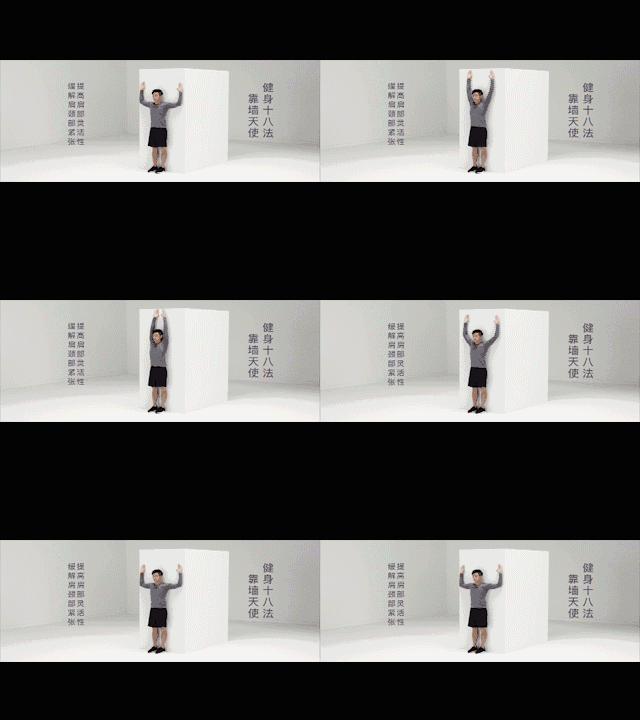
Video screenshot: General Administration of Sport of China "18 Scientific Fitness Methods"
Seated squat:
①Choose a chair of appropriate height (as shown). Stand with the tips of your toes 15–20 cm from the chair edge (approximately 1.5 times foot length).
②Exhale and tighten your core, shift the hips back to initiate hip flexion and sit back, keeping the tibia (lower leg) angle to the floor ≤45° and the knees not passing the toes; sit back until the buttocks lightly touch the chair surface (do not fully sit down).
③Inhale and push through the heels to stand up, extending the hips first then the knees; squeeze the glutes as you return to standing.
④Repeat the above motion for 10–15 repetitions.
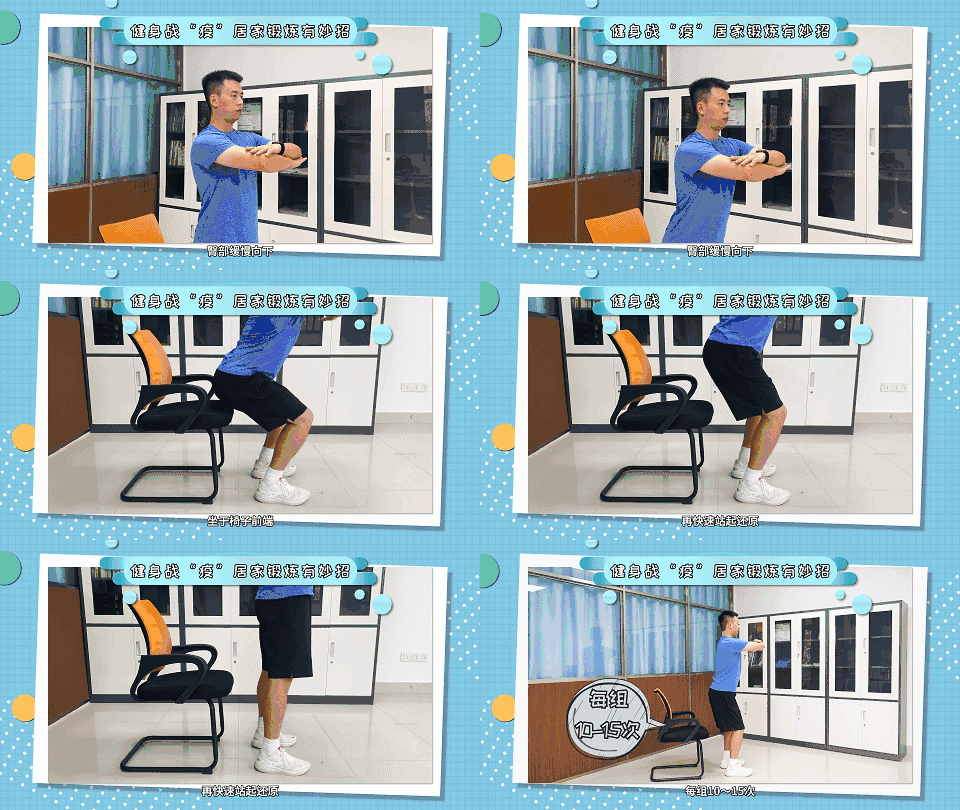
Image source: Yangtze Evening News
(2) "Subway station posture training" during the commute: single-leg balance stance (to enhance proprioception)
(3) "Mattress core activation" before sleep: dead bug (to protect the lumbar spine)
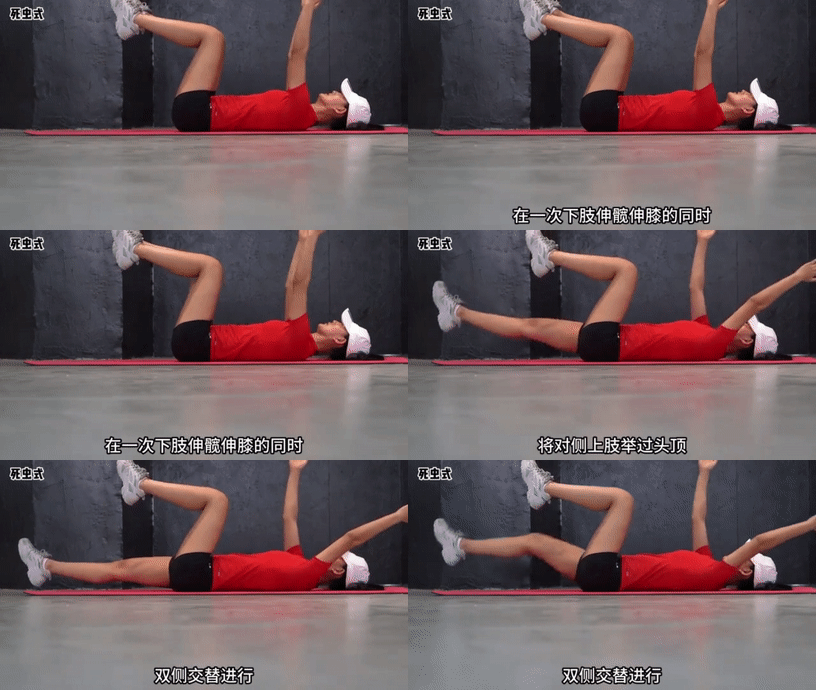
Dead bug:
①Lie flat on the floor with knees bent. After a deep inhalation and then a full exhalation, draw the navel toward the spine at the end of the exhale to brace the core, while ensuring the lower back remains pressed against the floor.
②Maintain breathing while bringing both hands up toward the chest and lifting the knees to a 90-degree angle.
③Throughout the entire exercise, the lower back should remain in contact with the floor and the core should stay continuously stabilized.
④Once you can comfortably hold the above position for more than 60 seconds, you can try extending the opposite arm and leg simultaneously.
2. Nutritional defenses
)
(1) Daily calcium intake from meals should be at least 800 mg (equivalent to 500 ml of milk + 200 g of tofu. Do not consume all of this in one meal; distribute it across the three meals)

(2) Vitamin D supplementation should achieve a serum concentration ≥30 ng/ml (an additional 2000 IU/day is needed in northern regions). The main source of vitamin D is sunlight; when sun exposure is insufficient, it can also be obtained through food or supplements.

(3) Consume 250 mg of Omega-3 daily. Omega-3 fatty acids can inhibit the production of prostaglandins, thereby effectively alleviating symptoms of arthritis. Recommended deep-sea fish include salmon, tuna, mackerel, herring, and halibut. Eating them 3–4 times per week, or choosing fish oil capsules of about 6 g each time, can help you obtain sufficient Omega-3 fatty acids.

4. Bone "annual check-up" after age 40
Save + Execute
Bone "Annual Checkup Checklist" and Countermeasures After Age 40
Examination Items
Warning Values
Intervention Plan
Bone Mineral Density T-score
≤-1.0
Dual-energy X-ray
+ resistance training
Body fat percentage
Men ≥25%
Women ≥32%
Fat-loss diet
+ Aerobic exercise
Joint space
Knee joint space
<3mm
<3 mm
PRP treatment
Knee protection treatment
Muscle mass
Appendicular skeletal muscle index
≤7.0kg/㎡
≤7.0 kg/m²
Supplement protein
Strength training
5. Follow-up health guide
1. Establish an exercise "stop-loss point": follow the 2-hour pain rule (if pain persists for more than two hours after exercise, adjust exercise intensity); if persistent joint pain occurs, stop exercising immediately and apply ice packs
2. Create a home rehabilitation corner: equip it with basic exercise devices such as foam rollers, myofascial balls, resistance bands, and small dumbbells; even without leaving home, set aside 30 minutes each day to exercise with them
3. Have a sports medicine specialist, fitness coach, or rehabilitation physician create an annual exercise prescription for you

Special reminder for you
After age 40, an annual bone and joint check should be done — it's as important as a vehicle inspection. Also remember: the 10 minutes you skip in scientific exercise today may be repaid many times over in an orthopedic ward in the future.