Sometimes eye pain may be related to the sinuses (with self-check guide)
Sometimes when your eyes hurt, the real lesion may be hidden in your nose—yes, the sinuses.
The sinuses surround the eyes; they are:
Frontal sinus: located above the eyebrows, deep in the forehead.
Ethmoid sinus: between the two orbits.
Maxillary sinus: beneath the orbit, within the cheekbone.
Each sinus communicates with the nasal cavity via an ostium; under normal conditions they are well ventilated.
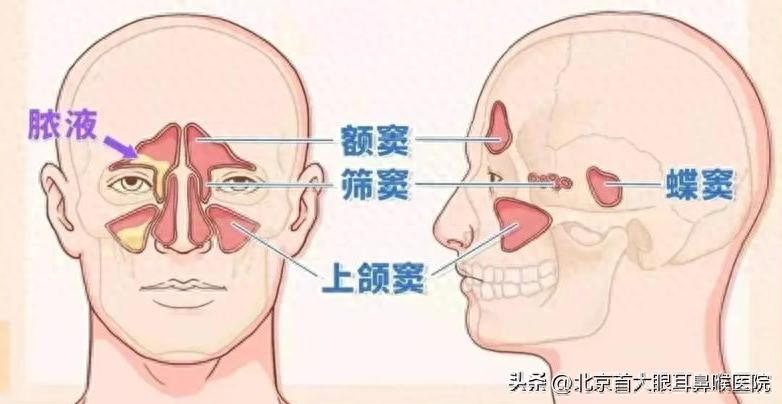
Here’s the key point: the bony walls of the sinuses are very thin, in some places even as thin as paper. Once a sinus becomes inflamed — the pus, pressure, and swelling from the inflammation — this can easily pass through that thin wall and directly affect the adjacent eye.
Of course, not all eye pain is related to the sinuses. Typically, eye pain caused by sinusitis has several characteristic features:
The pain is not a superficial stinging of the eyeball, but a deep, distending ache or tenderness. You can press with your hand to test:
Glabella (frontal sinus): if pressing increases the pain.
Medial canthus (ethmoid sinus): if it feels sore and swollen.
Zygomatic bone (cheek) (maxillary sinus): if it feels like a dull, heavy pain.
There are usually other accompanying symptoms:
Nasal symptoms: nasal congestion, purulent nasal discharge, decreased sense of smell.
Headache: a headache with a well-defined location, which may be worse upon getting up in the morning.
Other systemic symptoms: may be accompanied by fever, tooth pain, facial swelling, etc.
、
Triggers: often appears or worsens after a cold, during allergy season, or after water aspiration while swimming.
Simple self-check:
If you feel a throbbing pain around the orbital area accompanied by nasal congestion, purulent nasal discharge, or similar symptoms, then it is very likely you need to see an ENT specialist.
If sinusitis is not treated promptly, it may lead to more serious ocular problems:
Periorbital cellulitis: inflammation spreads to the soft tissues around the orbit, causing eyelid redness, swelling, and fever.
Orbital abscess: pus accumulates within the orbit, which may cause proptosis, decreased vision, and even blindness!
This is by no means alarmist. In clinical practice, cases of vision impairment caused by sinusitis are not uncommon.
This article is intended as medical science popularization and cannot replace professional medical diagnosis and treatment advice. If you have related symptoms, please seek medical attention promptly.