Why is my nose fine during the day but gets blocked as soon as I lie down at night?
After a busy day, you finally lie down comfortably in bed, ready to enjoy a good night’s sleep, but… your nose gives out first.
One nostril is completely blocked while the other doesn’t breathe well; you toss and turn to change positions, and the blocked nostril switches sides, leaving you sleepless. Strangely, when you get up the next morning, your nose is clear again.
What is going on here?
When we stand or sit, gravity causes more of the body's blood to flow toward the lower half of the body. When we lie down, blood redistributes more evenly and some returns to the head and upper body.
The inner walls of the nasal cavity are filled with turbinate tissue composed of sponge-like blood vessels. They are very soft and extremely well supplied with blood. When you lie down, the increased blood returning to the head causes passive congestion and swelling of the turbinate blood vessels, increasing their volume.
。
This is like a soft sponge: when it soaks up water it naturally expands, occupying more space in the nasal cavity, narrowing the airway, and making you feel — your nose is blocked.
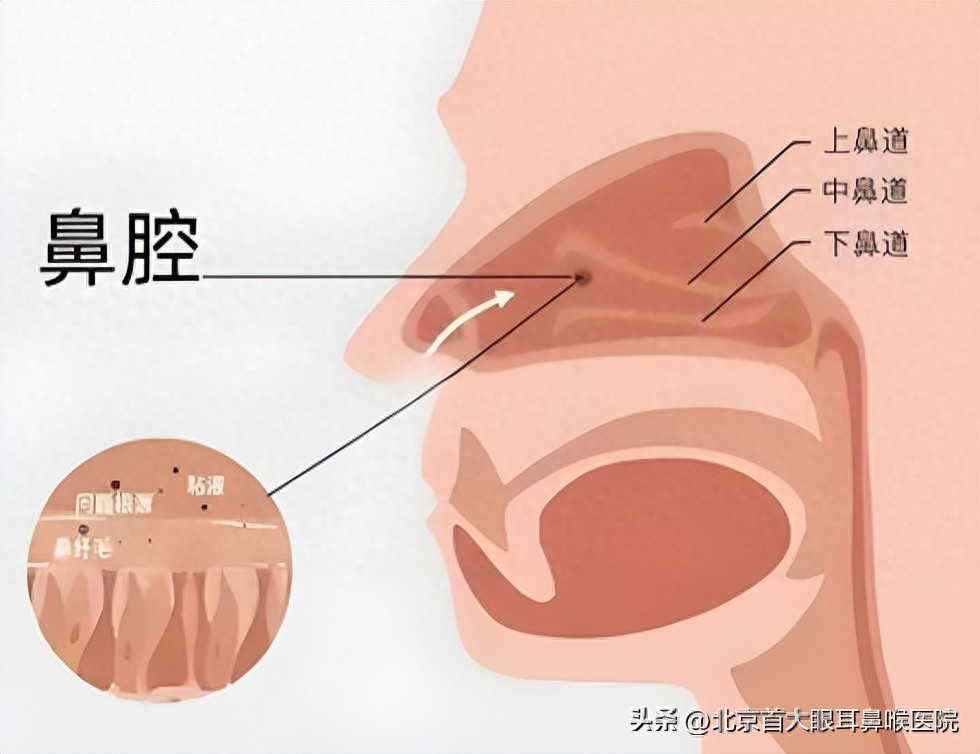
When standing and active during the day, gravity prevents excessive blood pooling in the turbinates, so there are no issues.
If it is only the physiological nasal cycle of the turbinates, the discomfort usually is not very severe. But if you already have some nasal problems, the symptom of nasal congestion when lying down will be dramatically amplified:
Chronic rhinitis / sinusitis
Symptoms: The nasal mucosa itself is in a state of long-term inflammation, congestion, and edema. During the day there may be only mild nasal congestion, but once lying down the congestion becomes especially severe. It is often accompanied by increased mucous secretion and decreased sense of smell.
Deviated nasal septum
Symptoms: If your nasal septum is crooked, the nasal passage on one side is congenitally narrower than the other. Compensation may be adequate during the day, but when you lie down at night, slight swelling of the turbinate on the narrow side can cause complete obstruction.
Allergic rhinitis
Symptoms: If you are allergic to dust mites, the bedroom—mattress, pillows, and bedding—becomes the main reservoir of allergens. When you lie down and your nasal passages are in close contact with these allergens, it can immediately trigger nasal congestion, sneezing, clear rhinorrhea, and nasal itching; symptoms are particularly pronounced at night.
Structural problems and drug effects
Adenoid hypertrophy: common in children but present in some adults; when lying flat, enlarged adenoids can obstruct the posterior nasal apertures, causing nasal congestion and mouth breathing.
Rhinitis medicamentosa: long-term overuse of topical nasal decongestants, such as certain nasal drops, can cause rebound congestion that worsens on discontinuation and is more pronounced when lying down.
You can try the following small measures:
Use a higher pillow: this is not a joke! Elevate the head with a pillow by 15–30 degrees to use gravity to reduce blood pooling in the nasal cavities, effectively offloading the nasal turbinates. This physically simulates an upright posture.
Warm steam inhalation: before bed, apply a hot towel to the nose, or bring a cup of hot water and inhale the rising steam—avoid scalding. Warm, humid air helps constrict blood vessels, reduce turbinate swelling, and thin viscous nasal mucus, making it easier to clear.
Saline nasal irrigation: use normal saline or seawater nasal spray to rinse the nasal cavities. This can wash away allergens and inflammatory secretions, reduce mucosal edema, and provide an immediate sense of patency. Routine use before bedtime is recommended.
If nighttime nasal congestion continues to recur after trying the above methods, persists for more than two weeks, or the following situations have already appeared, promptly undergo a professional nasal endoscopy:
Accompanied by headache, facial fullness/pain, and marked loss of smell.
Discharge of yellow-green purulent nasal mucus, or foul odor.
Onset of snoring and sleep apnea (breathing pauses).
Affects daytime mental state, causing difficulty concentrating.
This article is for reference only. If you have specific symptoms, please seek medical attention promptly.