Should Babies' Hair Be Dried with a Blow Dryer or Naturally? 3 Key Choices for Mothers to Protect the Scalp
As a pediatrician and a mother, I completely understand the dilemma parents face when deciding whether to let their child's hair air-dry or use a hairdryer after washing. This concern goes beyond mere convenience—it reflects a genuine care for the child's health. Drawing from both my professional expertise and personal parenting experience, I’d like to share some insights on this topic.
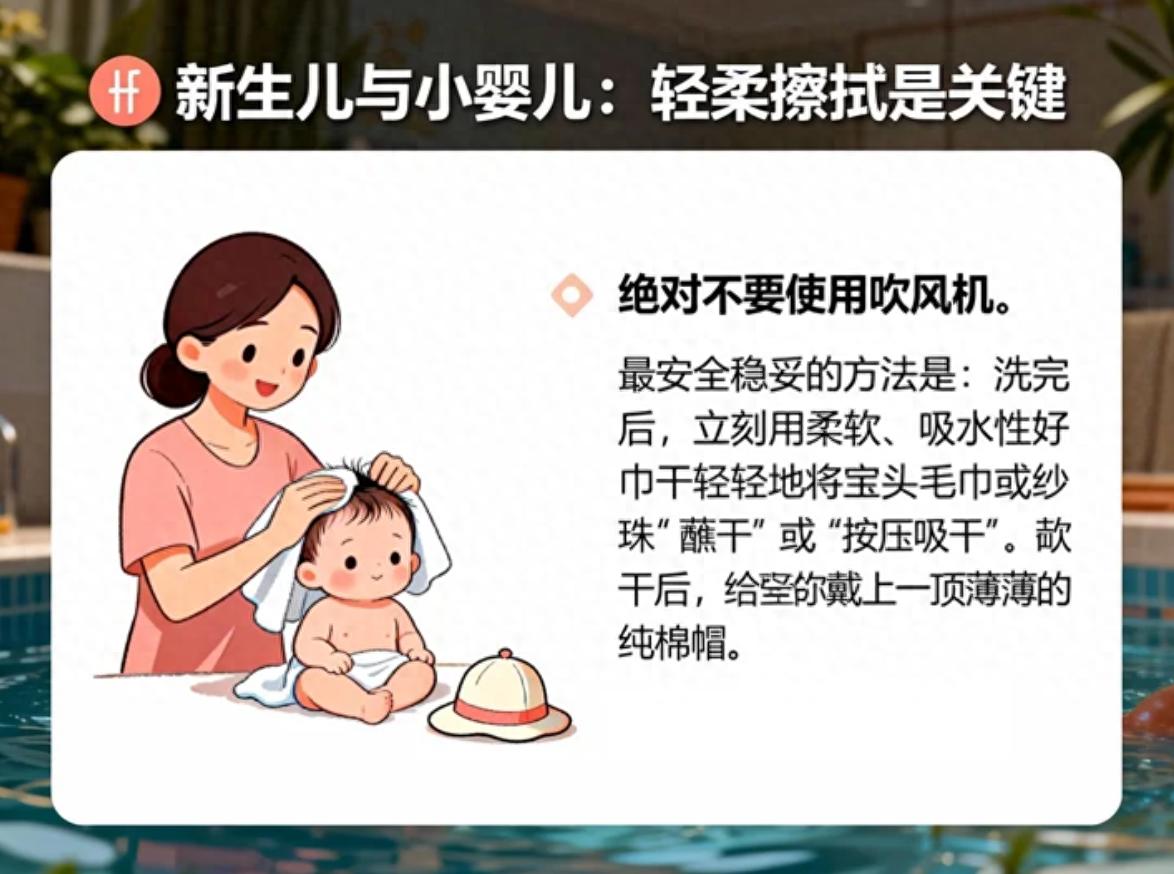
Newborns and Infants: Gentle Drying Is Key
For newborns and very young babies, my principle is clear: never use a hairdryer. A baby's hair, often referred to as "lanugo," is extremely fine and delicate, and their scalp is thin and sensitive. Even on the lowest setting, it is difficult to precisely control the temperature and distance of a hairdryer, which can easily lead to burns or excessive dryness.
The safest and most reliable method is to gently and patiently use a soft, highly absorbent towel or gauze to "blot" or "press" away the water droplets from the baby's hair immediately after washing. Treat this process with the utmost care, as if handling a precious piece of art. Once the hair is dry, put a thin cotton cap on the baby or keep them in a warm room to prevent chills.
Toddlers and Older Children: Flexible Choices, Safety First
As children grow older, their hair becomes thicker, and they become more active. It’s common for them to run around with wet hair after a bath. In such cases, we need to adapt our approach.
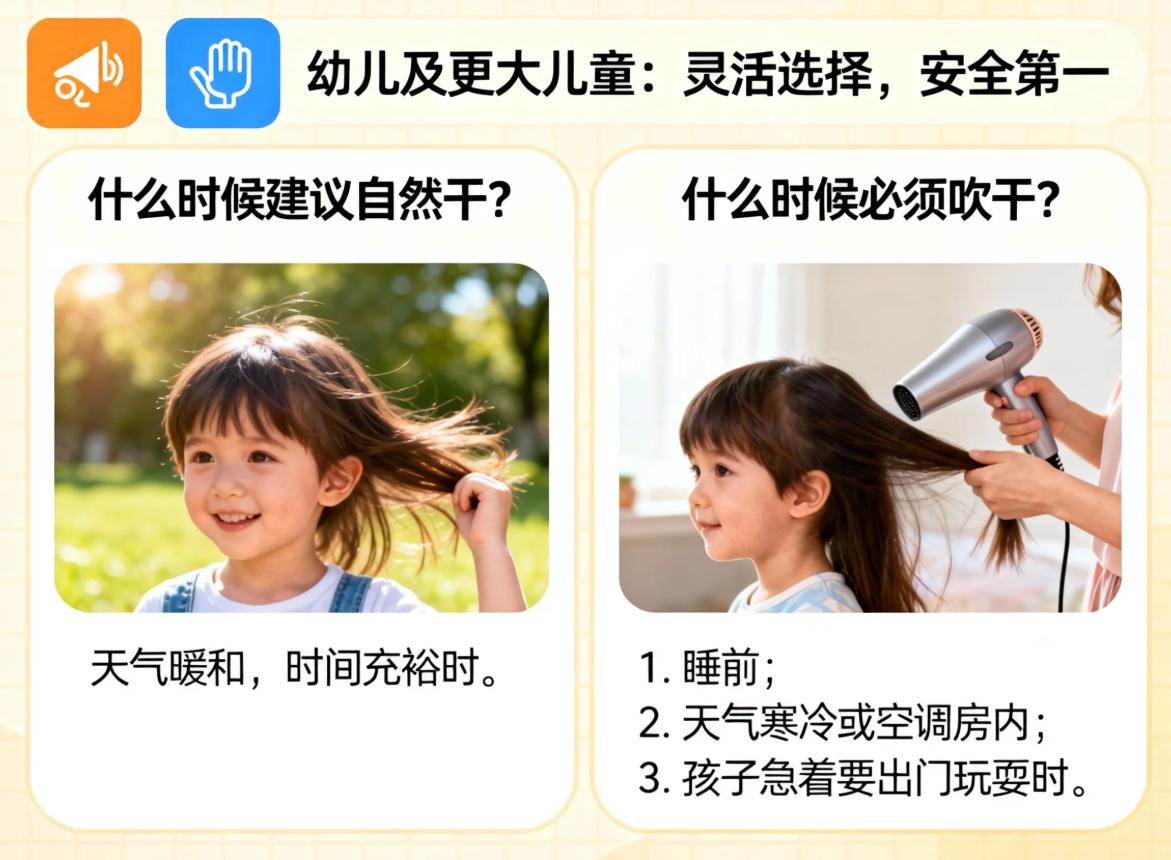
When is air-drying recommended?
If the weather is warm and time permits—for example, after a daytime bath—letting the child sit in a well-ventilated area to air-dry their hair is a good option. This completely avoids potential heat damage to the hair. You can use a microfiber towel or a regular towel to absorb excess moisture first, which speeds up the drying process.
When is blow-drying necessary?
In the following situations, I would not hesitate to use a hairdryer:
- Before bedtime: Never let a child sleep with wet hair. Evaporation of moisture draws heat from the head, increasing the risk of catching a cold or developing a headache.
- In cold weather or air-conditioned rooms: Similar to bedtime, it’s important to prevent exposure to dampness and cold.
- When the child is eager to go out and play: To save time and prevent them from going outside with wet hair exposed to wind.
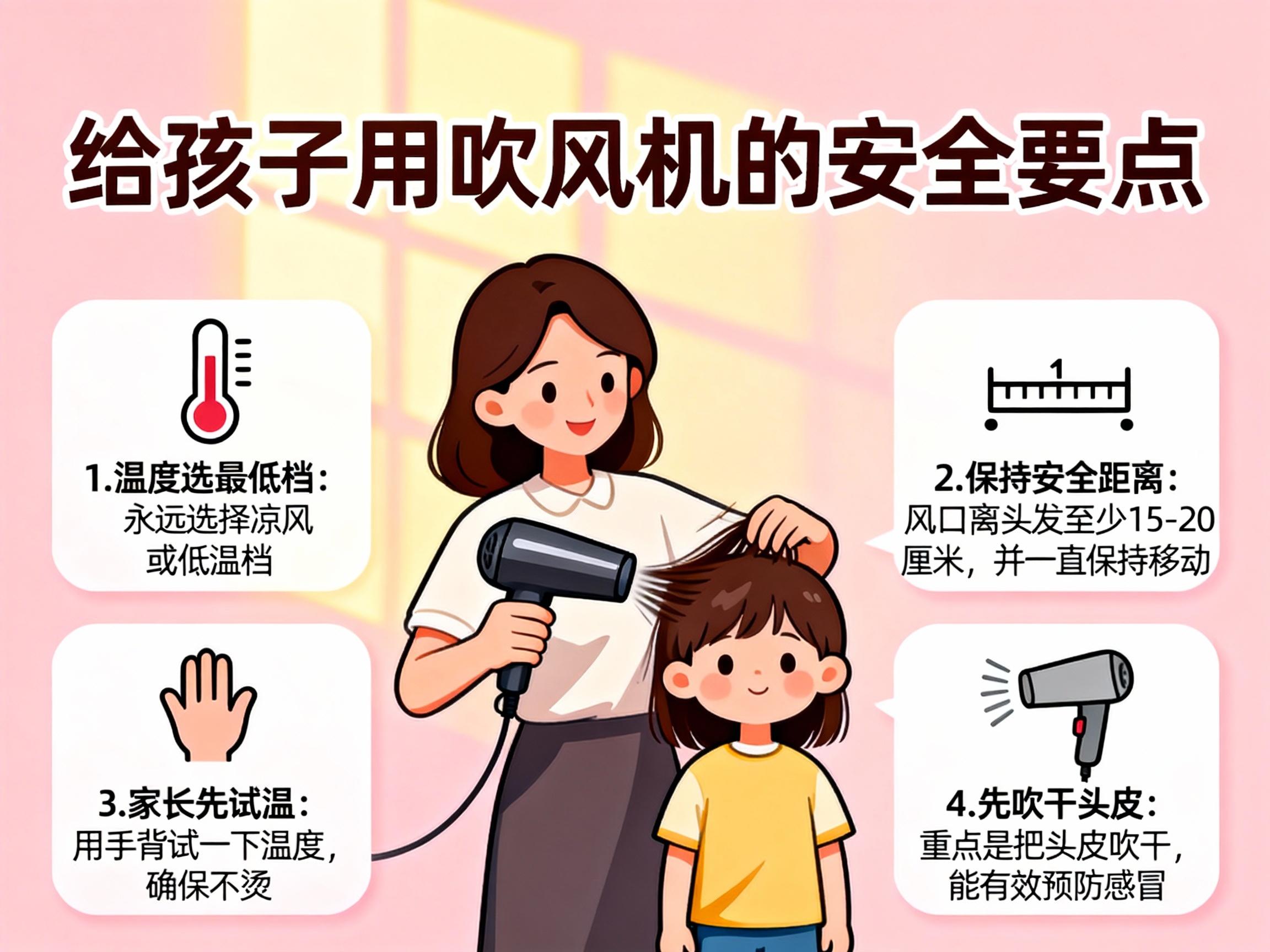
Safety tips for using a hairdryer on children:
- Use the lowest temperature setting: Always opt for the cool or low-heat setting, and start with a low airflow.
- Maintain a safe distance: Keep the dryer at least 15–20 centimeters away from the child’s hair, and keep it moving to avoid concentrating heat on one spot.
- Test the temperature first: Before using the dryer on my child, I always test the airflow on the back of my hand to ensure it’s not too hot.
- Focus on drying the scalp: Prioritize drying the scalp thoroughly, as this is more important for preventing colds than drying every strand of hair.
A Mother’s Helpful Tips
Beyond drying methods, here are a few additional details worth noting:
- Choose the right shampoo: Always use a mild, child-specific shampoo. Adult shampoos are often too harsh and can strip away the natural protective oils from a child’s scalp, leading to dry hair.
- Be gentle when detangling: If your child’s hair is tangled, avoid pulling forcefully. Start with a wide-tooth comb, gently working from the ends upward in sections, then comb through the entire length. Detangling before washing can also reduce post-wash knots.
- Pay attention to nutrition: Healthy, shiny hair relies on a balanced diet. Ensure your child gets enough protein (such as meat, eggs, and dairy), vitamins, and minerals to strengthen their hair from the inside out.

In summary, there is no one-size-fits-all rule for drying a child’s hair. The core principle is to “ensure the scalp is dried promptly while avoiding high-temperature damage.” As mothers, by observing carefully and adapting to our child’s needs, we can gradually find the method that works best for them.