Half of Body Heat Escapes Through the Head Without a Hat in Winter? The Elderly and Children Should Be Extra Cautious!
"Going out in winter without a hat is like a thermos without a lid." This folk saying vividly illustrates the importance of keeping the head warm. In cold winters, approximately one-third of the body's heat is lost through the head. When the temperature drops to around 4°C, about half of the body's heat dissipates from the head. Keeping the head warm is not just a simple measure against the cold; it serves as a health barrier against various diseases. This is especially crucial for vulnerable groups such as the elderly and children, whose thermoregulatory mechanisms are more fragile, making them more susceptible to serious health issues if their heads are exposed to cold.

Why Is the Head a Key Area for Warmth in Winter?
Although the head accounts for only about 7% of the body's surface area, it is a "hotspot" for heat loss. This is closely related to the head's unique physiological structure. The head is rich in blood vessels, with a blood flow-to-surface area ratio 4–10 times higher than that of the torso and proximal limbs. More importantly, unlike other parts of the body, the blood vessels in the head do not constrict in response to cold stimuli, leading to continuous heat loss. This physiological characteristic makes the head a primary channel for dissipating body heat.
Scientific studies show that the proportion of heat lost through the head at different temperatures is striking. In a 15°C environment, approximately one-third of the body's heat is lost through the head when stationary and without a hat. When the temperature drops to around 4°C, about half of the body's heat dissipates from the head. This proportion of heat loss far exceeds the head's share of the body's surface area, underscoring the importance of keeping the head warm. Additionally, the skin on the head is thin and densely populated with blood vessels, functioning like an "open radiator" that dissipates heat more easily in cold environments. Therefore, wearing a hat in winter is akin to adding a "cork" to the body, effectively reducing heat loss and maintaining stable body temperature.
Why Do the Elderly Need Extra Head Warmth?
As people age, their ability to regulate body temperature declines significantly. Multiple studies indicate that normal body temperature slightly decreases with age, with individuals aged 65 and above having a body temperature even lower than the average for the general population. This lower body temperature makes the elderly more sensitive to cold, and the effects of head exposure to cold are more severe.
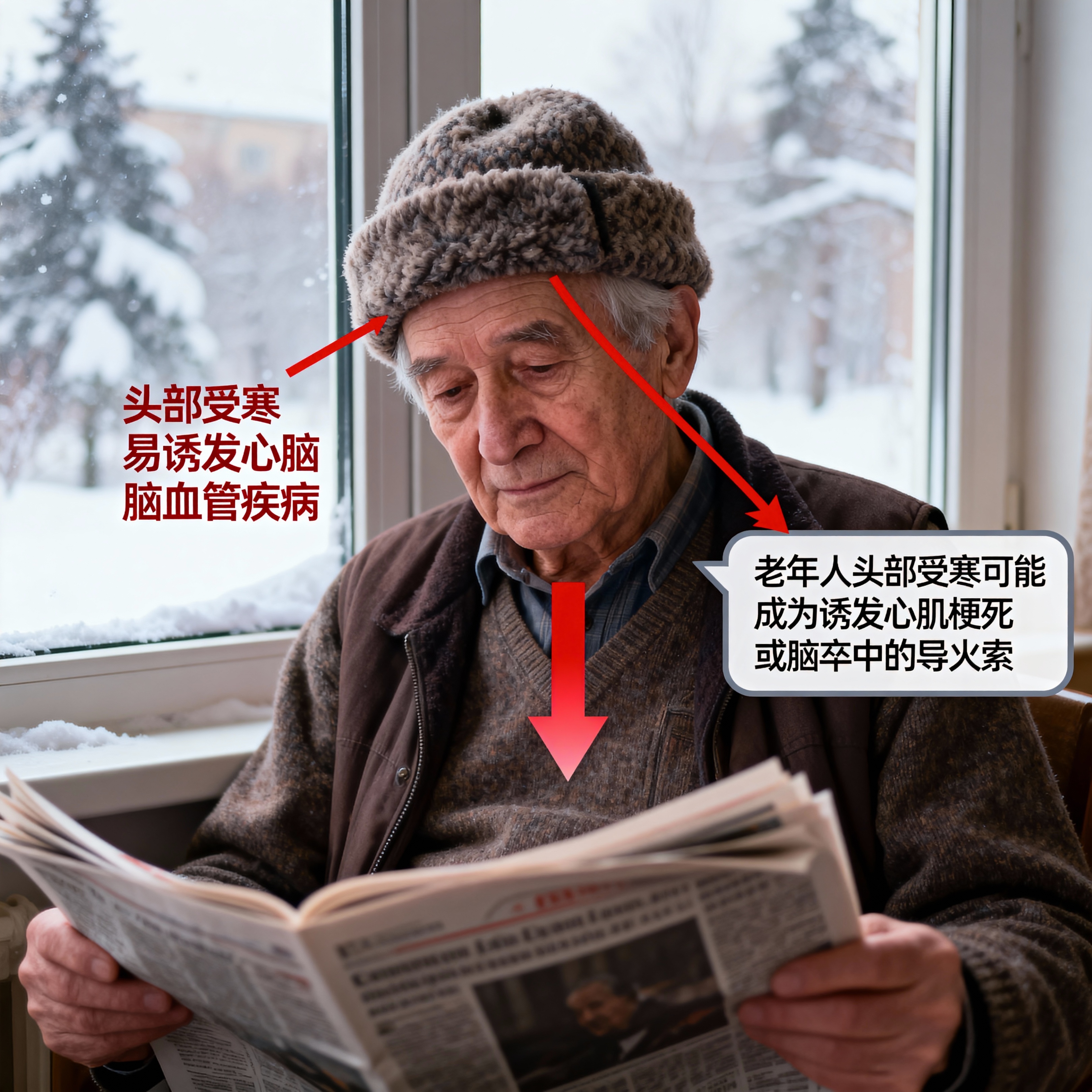
Cold exposure to the head in the elderly can directly trigger cardiovascular and cerebrovascular diseases. Cold stimuli activate the sympathetic nervous system, leading to vasoconstriction, elevated blood pressure, and increased cardiac workload. For every 1°C drop in temperature, the mortality rate related to cardiovascular diseases increases by 1.6%, and the incidence rate rises by 1.2%. Particularly for elderly individuals with underlying conditions such as arteriosclerosis or hypertension, head exposure to cold can act as a "trigger" for myocardial infarction or stroke.
The Winter Health Guidelines issued by the Shanghai Municipal Health Commission explicitly state: "The elderly should pay attention to keeping warm, add clothing appropriately based on perceived temperature, and use air conditioning or heating when it is cold. When moving between environments, avoid drastic temperature differences. Sudden and significant temperature changes in a short period can easily induce cerebrovascular accidents." This indicates that authoritative institutions also recognize the importance of head warmth for the health of the elderly.
Special Needs for Head Warmth in Children
The need for head warmth in children should not be overlooked. Children's heads account for a relatively large proportion of their body weight. An infant's head weight is equivalent to half of their total body weight, while the head weight of a 3-year-old and a 6-year-old accounts for 18% and 16% of their total body weight, respectively. This means that children lose a higher proportion of heat through their heads and are more sensitive to cold.
Additionally, children's immune systems are not fully developed, making their defenses weaker. Cold exposure to the head can impair the "defensive outpost" of the nasal mucosa, allowing viruses to invade easily. This explains why children are more prone to catching colds in winter. According to the Cold Index released by the China Meteorological Administration, the incidence of colds increases significantly when the temperature is around 10°C with a temperature difference exceeding 10°C. Children often lack sensitivity to temperature changes and may not take timely measures to keep warm even when they feel cold.
Children's heads have denser blood vessel distribution and more active blood circulation, making heat loss through the head more pronounced. At the same time, children's necks are not fully developed, with muscles and ligaments not yet fully formed. Insufficient head warmth can lead to more serious health issues. Therefore, when children go out in winter, wearing a hat is not only a necessity for warmth but also an essential measure for health protection.

Four Health Benefits of Wearing a Hat
1. Preventing Cardiovascular Diseases
Cold stimuli cause vasoconstriction and increase cardiac workload. Wearing a hat reduces heat loss from the head and minimizes blood pressure fluctuations. Studies show that for every 10°C drop in temperature, systolic blood pressure rises by an average of about 5.7 mmHg. As the elderly have reduced vascular elasticity, their blood pressure fluctuations are more significant, increasing the risk of myocardial ischemia, angina, or even myocardial infarction. Therefore, wearing a hat when the elderly go out in cold weather can effectively reduce vasoconstriction and blood pressure fluctuations, lowering the risk of cardiovascular diseases.
2. Preventing Cerebrovascular Diseases
Cold exposure to the head can lead to cerebral vasoconstriction and insufficient blood supply, increasing the risk of stroke. Research shows that the incidence of cerebrovascular diseases is significantly higher in winter than in summer. Wearing a hat helps maintain stable brain temperature and reduces the likelihood of vascular spasms or ruptures. Particularly for the elderly with arteriosclerosis or hypertension, head warmth is a crucial measure for preventing cerebrovascular accidents.
3. Reducing the Risk of Respiratory Diseases Such as Colds
The nasal mucosa serves as the first line of defense for the respiratory tract. Cold stimuli cause vasoconstriction in the nasal mucosa, reduce mucus secretion, and weaken its defensive function. Wearing a hat minimizes direct exposure of the face and nasal passages to cold air, helping to maintain the mucosal defense function. Clinical studies confirm that individuals who habitually wear hats in winter have a significantly lower incidence of respiratory diseases such as colds.
4. Preventing Frostbite and Skin Damage
Cold weather can easily lead to frostbite in exposed areas such as the ears and face. The skin on the ears is thin with fewer blood vessels, making it highly susceptible to frostbite in low temperatures. Children are particularly prone to frostbite because their skin is thinner, blood vessels are more abundant, and blood circulation is more active. Wearing a hat effectively protects the ears and face, reducing the risk of frostbite. Additionally, hats prevent dust and microorganisms from adhering to the scalp, lowering the incidence of scalp infections and skin inflammation.

Scientific Warmth: More Than Just Wearing a Hat
Although wearing a hat is an important measure for staying warm in winter, scientific warmth requires a holistic approach. The "onion-style dressing method" is an ideal winter warmth strategy—choose moisture-wicking and heat-generating innerwear close to the skin, layer with fluffy and warm clothing in the middle, and select windproof and waterproof outerwear. Additionally, the following points should be noted:
- Foot Warmth: As the saying goes, "cold starts from the feet." Keeping the feet warm is equally important. Choose warm cotton socks and slip-resistant, insulated shoes to prevent heat loss from the feet, which can affect the entire body.
- Neck Warmth: The neck is a crucial area connecting the head and torso and is also a channel for heat loss. Wear a scarf or neck warmer when going out to protect the neck from direct exposure to cold wind.
- Avoid Overheating: While staying warm is important, overheating can lead to excessive sweating, which increases the risk of catching a cold. Adjust clothing according to temperature changes and activity levels to maintain moderate warmth.
- Indoor Warmth: In winter, indoor temperatures should be maintained between 20–22°C, with humidity controlled at 45%–60%. The elderly, in particular, should ensure stable indoor temperatures and avoid frequent movement between environments with significant temperature differences to reduce blood pressure fluctuations.

Hat Selection Recommendations for Special Groups
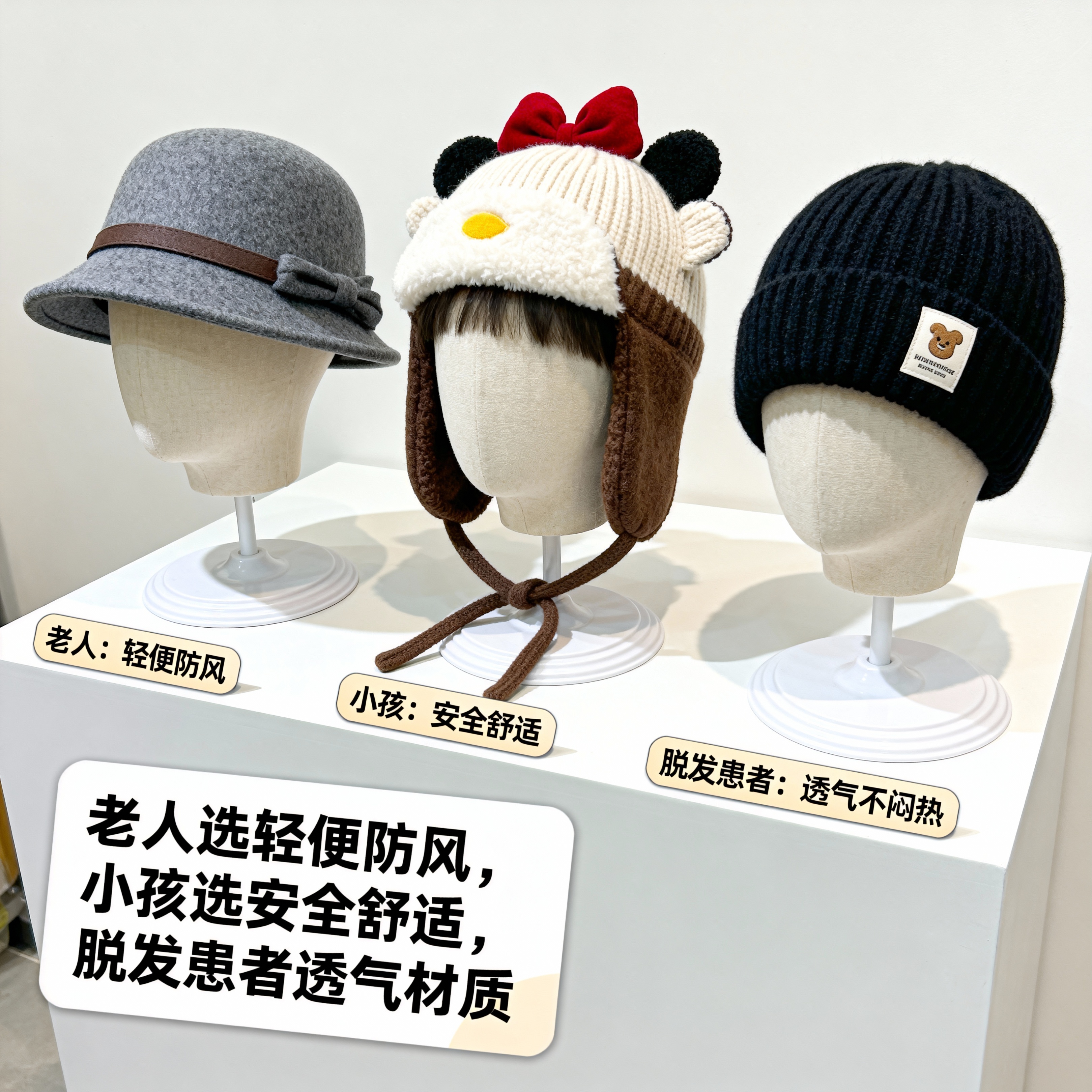
Elderly: The elderly should choose lightweight, windproof, and warm hats made of materials such as wool or tweed. Hats should cover the ears to prevent frostbite. At the same time, hats should not be too tight to avoid affecting blood circulation. For elderly individuals with hypertension, wearing a hat can reduce direct stimulation of blood vessels by cold air, minimize blood pressure fluctuations, and lower the risk of cardiovascular and cerebrovascular diseases.
Children: Children should wear hats that meet safety standards, avoiding small detachable parts or excessively long cords that pose safety hazards. According to GB31701-2015 "Safety Technical Code for Infant and Children Textile Products," children's hats must pass tests for harmful substances (e.g., lead content ≤100 ppm, phthalates ≤0.1%) and physical mechanical performance tests (e.g., small parts pull test). Children lose a higher proportion of heat through their heads, and their skin is thinner, so hats made of warm and breathable materials such as wool or blends are recommended. For infants, special attention should be paid to the softness and comfort of the hat to avoid pressure on the head.
Individuals with Hair Loss: Individuals with hair loss can wear hats but should choose breathable materials such as cotton or linen, avoiding synthetic or non-breathable fabrics. The size of the hat is also crucial—it should not be too tight to avoid affecting scalp blood circulation. In hot weather, hats should be changed frequently, and the scalp should be kept dry to reduce oil buildup, which can exacerbate hair loss.
Small Hat, Big Health
Wearing a hat in winter may seem simple, but it embodies profound health wisdom. Keeping the head warm is not only an effective way to resist the cold but also a health barrier against various diseases. This is especially important for vulnerable groups such as the elderly and children. By scientifically selecting and using hats, heat loss from the head can be effectively reduced, body temperature stabilized, and the risks of colds, frostbite, and cardiovascular and cerebrovascular diseases minimized.
In the cold winter, let us develop the habit of wearing hats and prepare suitable hats for our families, especially the elderly and children, to collectively build a health defense line. After all, health is the greatest wealth in life, and prevention is better than cure. A suitable hat may become an important weapon in safeguarding health.