The Flu Tore Up My “Supermom” Script but Helped Me Find Myself
。
Honestly, I always thought influenza was just an "upgraded" cold, until this winter when it knocked me down on my way home from work. I'm the mother of two children, have worked hard in my career for ten years, and am used to juggling five things at once. But this time, the flu told me in the most direct way: your body is not a perpetual motion machine.
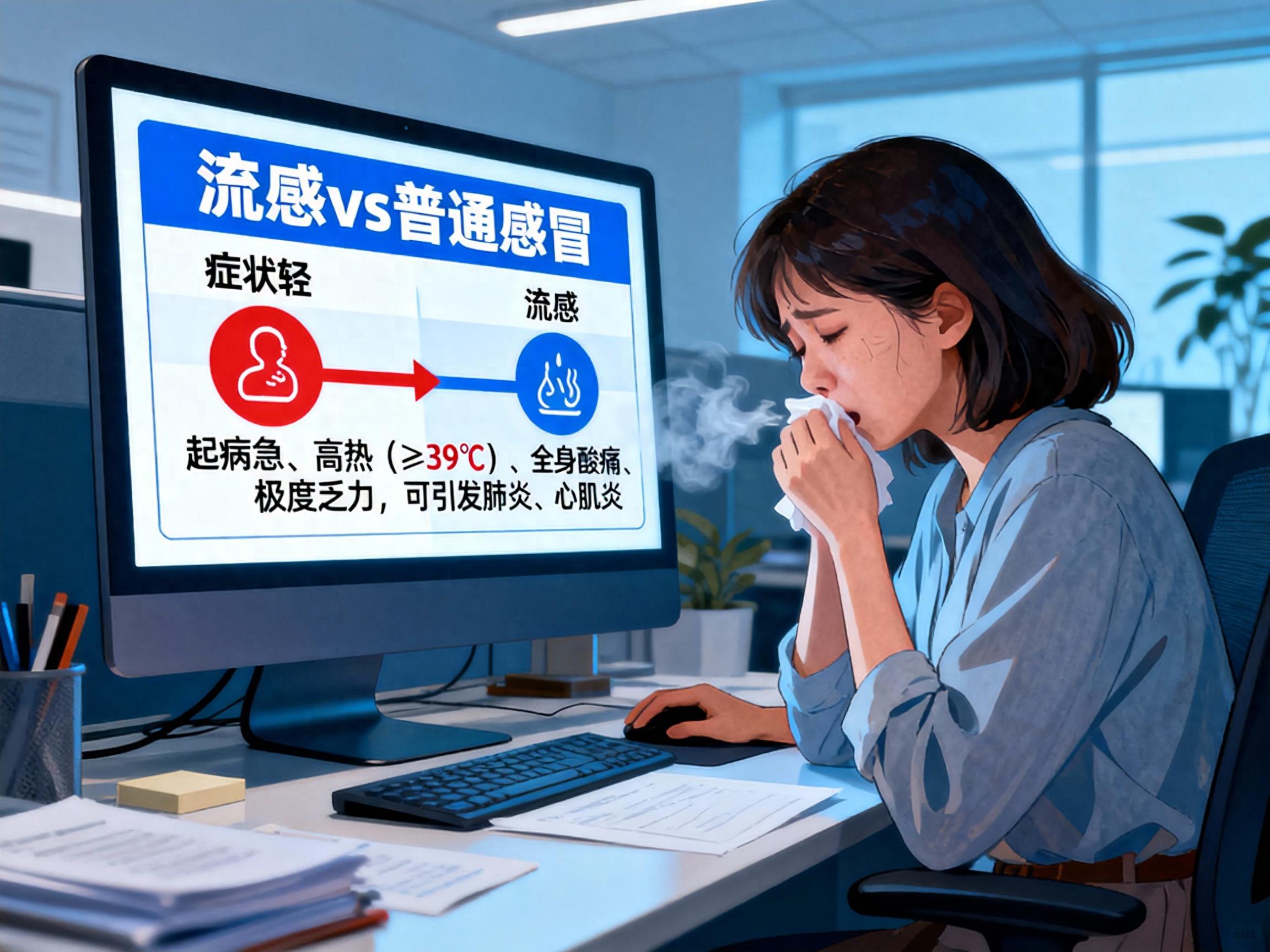
1. “It’s Just a Cold, Right?” — How My Wishful Thinking Nearly Caused a Disaster
That morning when I got up, I felt a bit of itch in my throat and lightheaded. I glanced at the weather forecast on my phone: -5℃. "It's definitely just a common cold," I said as I swallowed two cold pills and prepared breakfast, "drink more hot water and it'll be fine."
Looking back now, how ridiculous that self-doctoring was. Influenza viruses and common cold viruses are completely different: the common cold has milder symptoms, whereas influenza has a sudden onset, often accompanied by fever above 39℃, generalized muscle aches and extreme fatigue, and can lead to serious complications such as pneumonia and myocarditis.
But I didn't pay any attention at the time. The child was waiting for me to take them to school, the company was waiting for me to attend a meeting, the household was waiting for me to cook. In a life where everything is "waiting for me," getting sick becomes a luxury.
By noon my fever had already reached 38.5℃. Colleagues urged me to go home and rest, but I laughed and said, "It's nothing; if I can't handle a little illness, how can I be a mom?"
2. From “Powering Through” to “Going Flat” — The Moment I Truly Understood My Body’s SOS
The turning point came that night. I had finished preparing dinner as usual, but nearly fainted while bringing the dishes to the table. My husband rushed me to the hospital; my temperature was measured at 39.5℃.
The doctor's expression was grave after examining me: "Do you know how dangerous influenza-induced myocarditis can be? Recently a 41-year-old media professional died because she treated the flu like a minor cold—only 13 days from fever to death."
That sentence woke me like a bucket of cold water. That media professional was a mother of two who had just given birth to her second child last year, yet because she missed the golden treatment window she was gone forever. 'Toughing it out' is not a synonym for strength, but rather an irresponsibility toward the family.
Lying in the hospital bed, I seriously reflected for the first time: why do we always assume mothers are supposed to be superheroes?

3. The Cruel Truth About Influenza: It Especially “Favors” These Groups
Only after the doctor's patient explanation did I realize that influenza's lethality for certain populations is far greater than imagined.
Postpartum mothers are a high-risk group for influenza. After childbirth, hormonal fluctuations, sleep deprivation during breastfeeding, and added work stress can severely compromise the immune system. This is why many young mothers experience particularly rapid disease progression after contracting influenza.
High-risk groups such as pregnant women, children, the elderly, and patients with chronic diseases can have a rate of severe illness more than 10 times that of the general population after infection.
Even more frightening, the golden treatment window for influenza is only 48 hours. Antiviral medications must be taken within this period to be effective, yet many people miss the optimal treatment window because they try to "tough it out."
4. My "Surrender Declaration": From Supermom to a "Mom Who Can Cry"
After recovering, I did three things I never would have done before:
1. Held a family meeting
I honestly told my family: "I'm not Superman; I get tired and I get sick. This household needs everyone to carry the load together." Unexpectedly, my husband and children understood. Now the housework has clear division of duties, and everyone must take part in the big cleaning on weekends.
2. Learned to "be lazy"
I no longer pursue perfect household standards. The floor can be mopped every two days, dinner can occasionally be ordered in, and the children's clothes can be folded by themselves. After lowering my standards, I found that my family became more proactive.
3. Put health first
I got the influenza vaccine; although it cannot prevent infection 100%, it can reduce the risk of severe illness by 60%. I have also learned to recognize my body's distress signals and no longer dismiss discomfort as "no big deal."
5. To each of you who may be "trying to tough it out"
If you also habitually put yourself last, I want to share these lessons learned the hard way:
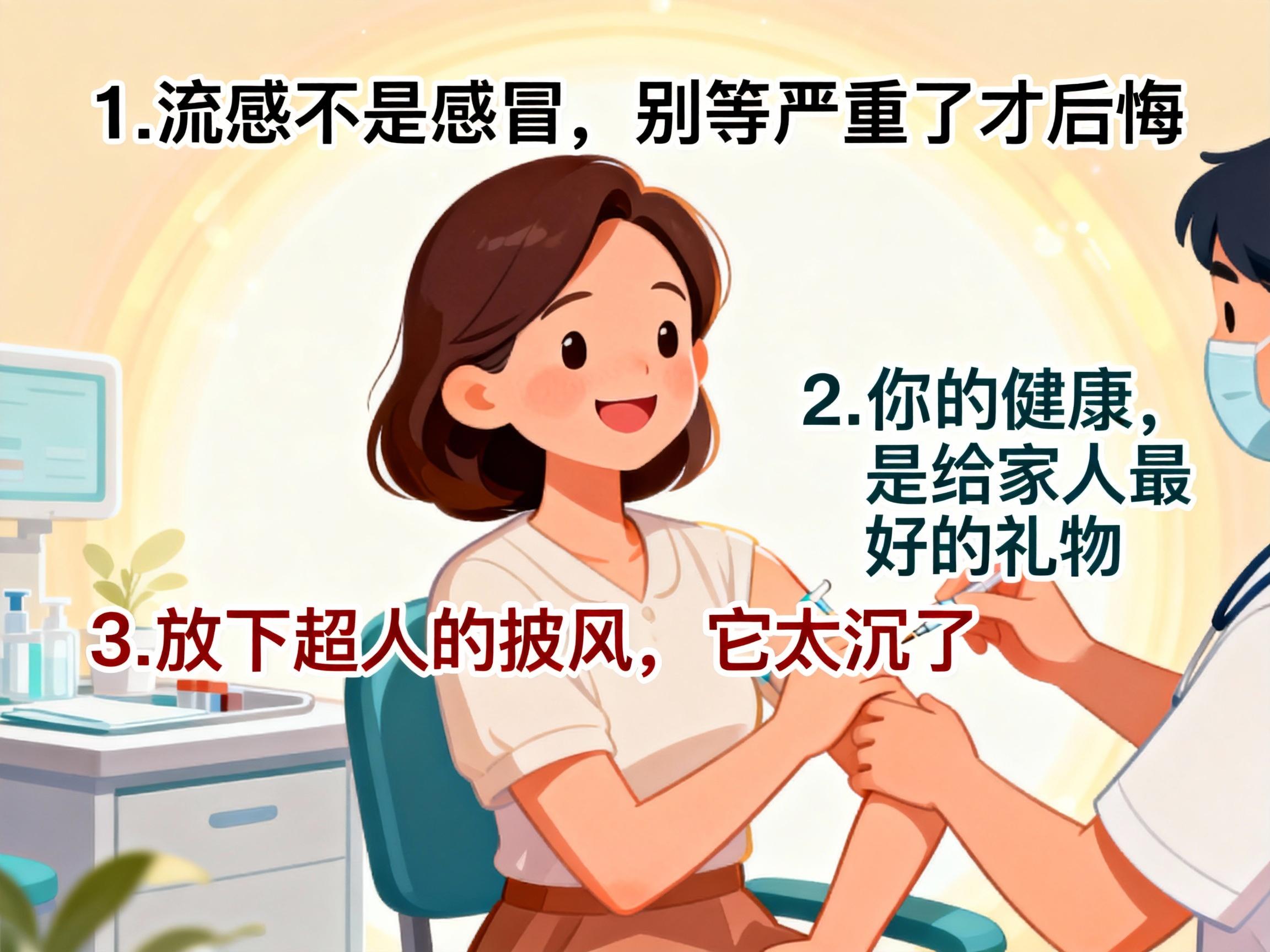
Influenza is not a cold — don’t wait until it’s severe to regret it
If a persistent high fever above 39°C, difficulty breathing, altered consciousness, or similar symptoms occur, seek medical attention immediately. Remember the golden 48-hour rule: antiviral medications are most effective in the early stage of infection.
Your health is the best gift you can give your family
A tired, sick, anxious mother is the greatest drain on a family. A mother who knows how to rest, whose emotions are stable and who is healthy, is the blessing for her children and household.
Put down the superhero cape — it’s too heavy
Our society always praises mothers’ self-sacrifice, but forgets they are flesh and blood. "Living for yourself" is not selfish; it is the prerequisite for sustainable giving. Appropriate rest and necessary help-seeking are not failures, they are wisdom.
Today, I am still a busy mother. But I no longer play the all-capable superhero; instead I have learned to say, when I am exhausted: "I need to rest."
The flu will eventually pass, but the lesson it taught me I will always remember: true strength is not about toughing it out, but about knowing when to let go. I hope my story gives you a bit of courage, so that when you need to, you can calmly say: "Today, I want to take care of myself first."