Should you use a hair dryer or let it air-dry after your baby’s bath? Three key choices for moms to protect the scalp
As a pediatrician and also a mother, I fully understand the dilemma many face after washing their child’s hair: “air-dry” or “blow-dry.” This concern is not just about convenience; it reflects care for the child’s health. Below I will discuss this topic combining professional knowledge and parenting experience.
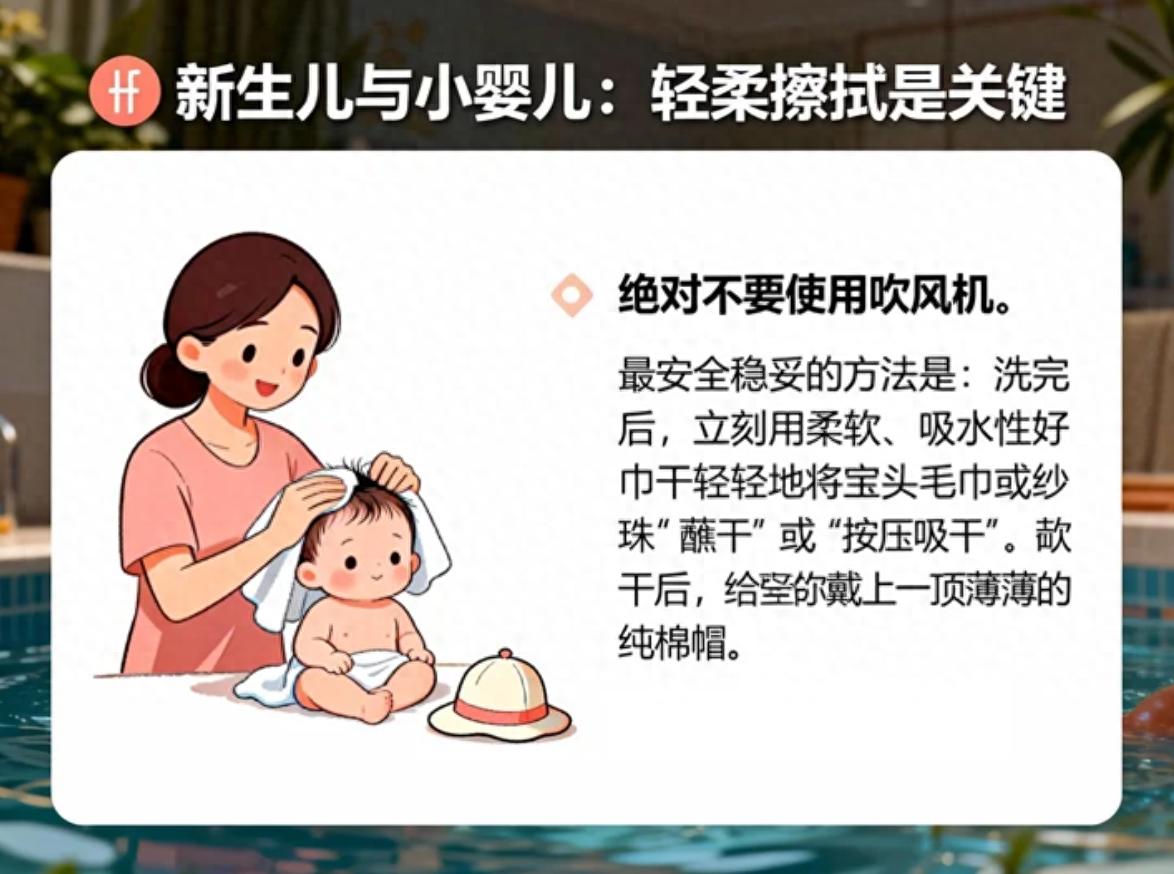
Newborns and young infants: gentle patting and wiping are key
For newborns who have only just been born, my principle is: absolutely do not use a hair dryer. A baby's hair is often called "lanugo," very fine and soft, and the scalp skin is even more delicate and translucent. Even on the lowest setting, a hair dryer cannot precisely control temperature and distance, and can easily cause burns or excessive drying.
The safest and most reliable method is: after washing, immediately use a soft, highly absorbent towel or gauze cloth to gently and patiently "dab" or "press to absorb" the water droplets from the baby's hair one by one. The entire process should be performed with gentle movements, as if handling a precious work of art. After ensuring the hair is dry, put a thin cotton cap on the baby or keep them in a warm room to avoid catching a chill.
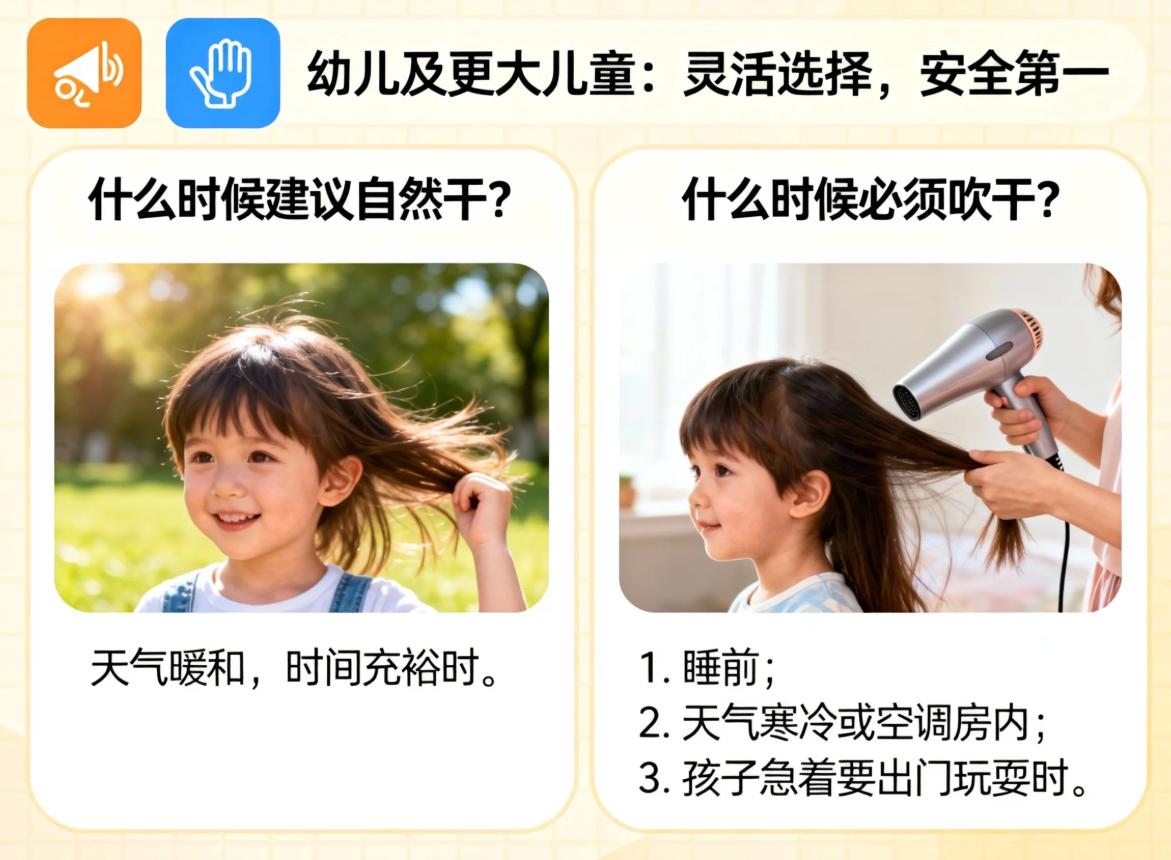
Toddlers and older children: choose flexibly, safety first
When the child is a bit older, with more hair and increased activity, running around right after washing their hair is all too common. At that point, we need to handle things flexibly.
When is air-drying recommended?
If the weather is warm and there is ample time — for example, bathing during the day — letting the child sit in a well-ventilated area and allowing the hair to air-dry is a good choice. This completely avoids the potential damage of hot air to the hair. You can first use a dry cap or towel to absorb excess moisture so it dries faster.
When is blow-drying necessary?
In the following situations, I would not hesitate to pick up the hair dryer:
Before bed: Never let a child sleep with wet hair. Evaporation of moisture removes heat from the head, making it very easy to catch a cold and possibly causing headaches.
In cold weather or air-conditioned rooms: Same as before bed—promptly block out dampness and cold.
When the child is in a hurry to go out to play: To save time and to prevent them from going out with soaked hair and getting chilled by the wind.
:
Safety points for using a hair dryer on children:
Choose the lowest temperature: always select cool air or a low-heat setting, and you can start with a low fan speed.
Maintain a safe distance: the nozzle should be at least 15–20 cm away from the child’s hair and keep moving; do not blow strongly on one spot.
Parents should test the temperature first: before I blow my child’s hair, I always test the temperature on the back of my own hand to make sure it’s not hot.
Dry the scalp first: the key is to dry the scalp, which is more important than drying every single hair strand and can effectively help prevent colds.

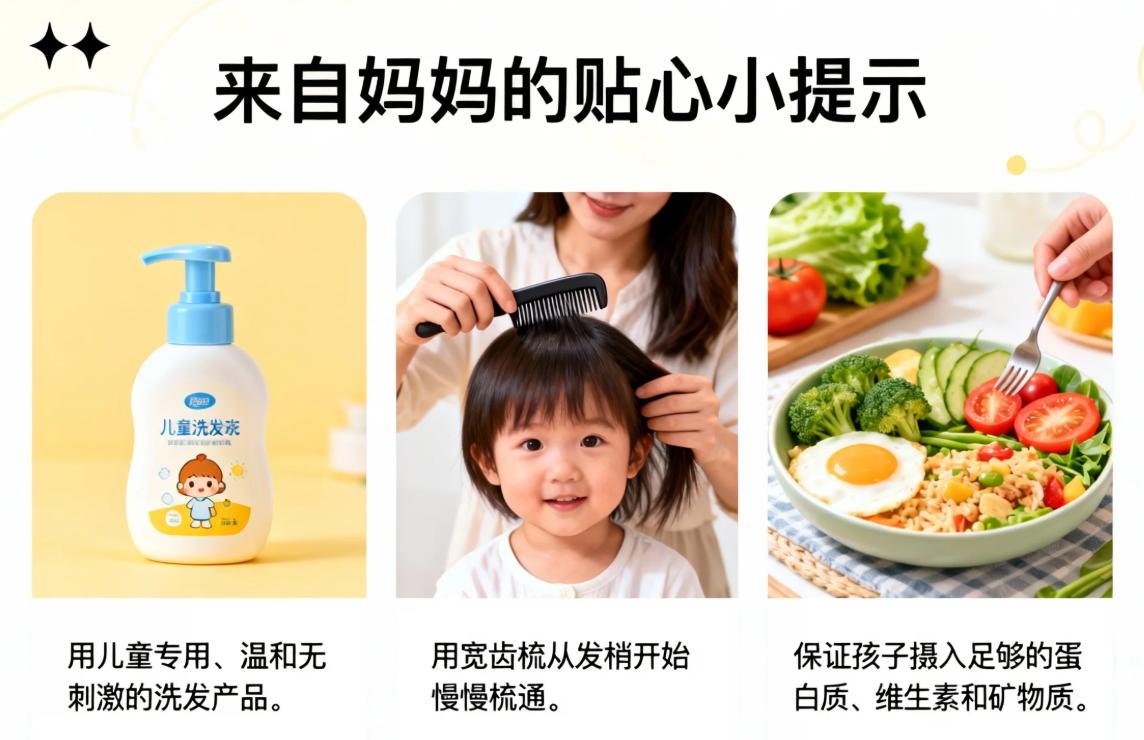
A thoughtful little tip from Mom
Besides drying methods, there are a few small details I’d like to share:
Choose the right shampoo: Be sure to use a children-specific, mild, non-irritating shampoo. Adult shampoos have stronger cleansing power and can strip the child’s scalp of its natural protective oils, leaving hair dry and brittle.
Gentle detangling: If the child’s hair is tangled, don’t pull hard. Start with a wide-tooth comb at the ends and slowly work through the tangles section by section, then comb through the whole length. Combing hair before washing can also reduce post-wash tangling.
Pay attention to nutrition: Healthy, shiny hair depends on balanced nutrition. Ensuring the child gets sufficient protein (such as meat, eggs, dairy), vitamins, and minerals helps hair become stronger from the inside out.
In short, there is no one-size-fits-all rule for drying a child’s hair. The core principle is “ensure the scalp is dried promptly and avoid high-temperature damage.” As mothers, by observing carefully and paying attention, we can gradually find the method that suits our own child best.
I hope these shares are helpful to you! If you have more specific questions about your child’s hair, such as especially dry hair, we can continue the conversation.