Which of the three daily meals should be eaten less?
"Doctor, I want to control my weight recently; can I eat one less meal?" Whenever I hear this, I always think of the patients I've met over the years and the stories behind their eating.
"Skipping a meal" seems to have become a common strategy for many people to control weight and save time. But which meal can be "skipped"? Breakfast, lunch, or dinner? This question not only concerns weight loss effects, but also profoundly affects our overall health, metabolic rhythms, and even longevity risk.
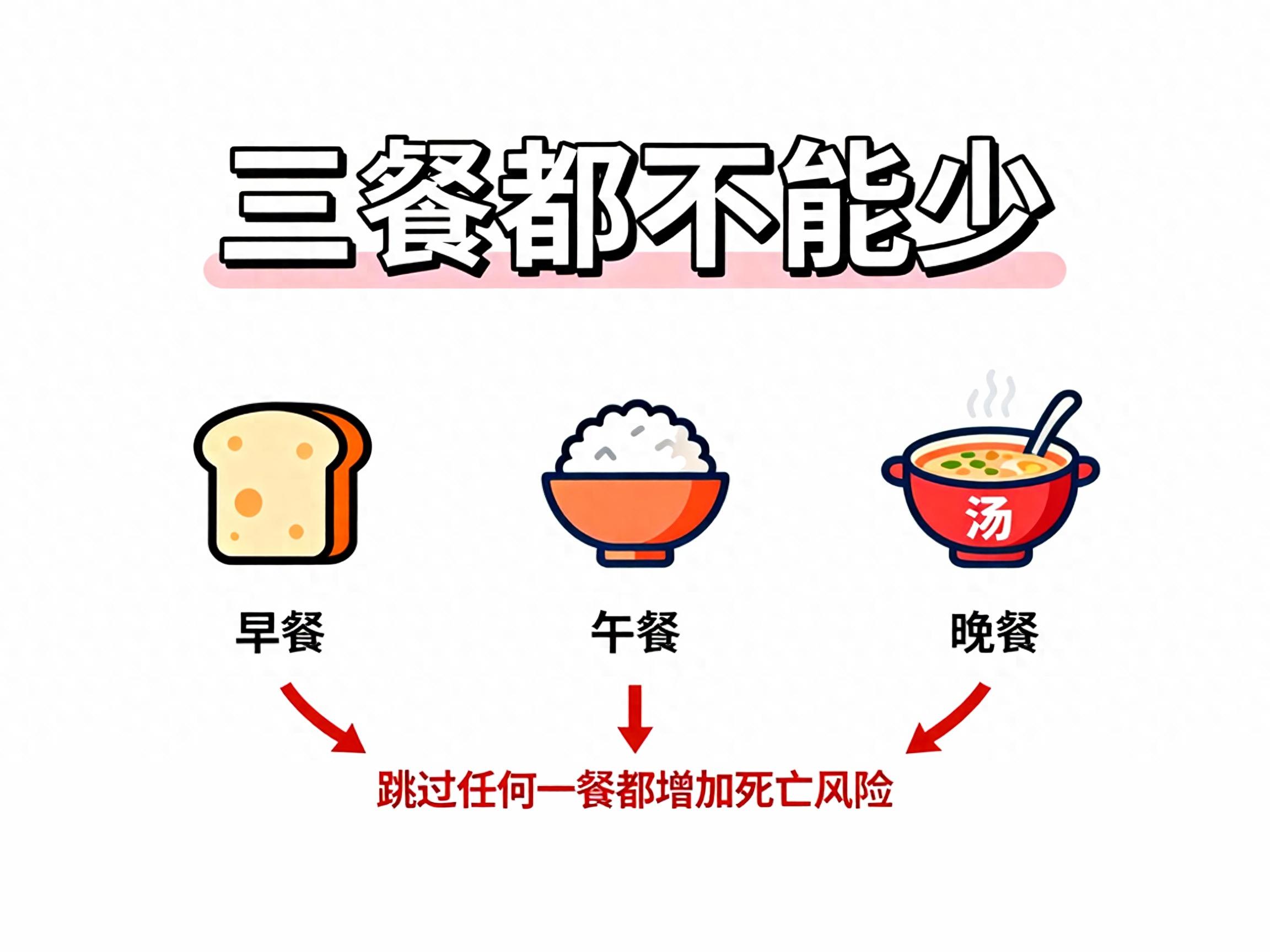
1. Don’t skip any of the three meals: skipping any meal increases mortality risk
。
First, one core principle must be made clear: eating three meals regularly is more important than deliberately omitting a particular meal.
A large cohort study covering 24,000 people in 2022 showed:
Skipping breakfast: all-cause mortality risk ↑11%, cardiovascular mortality risk ↑40%
Skipping lunch: all-cause mortality risk ↑12%, cardiovascular mortality risk ↑15%
Skipping dinner: all-cause mortality risk ↑16%, cardiovascular mortality risk ↑19%
Even more alarming:
,
;
People who eat only one meal a day have a 30% increased all-cause mortality risk and an 83% surge in cardiovascular mortality risk;
Even when eating only two meals a day, mortality risk remains significantly higher than in those who eat three regular meals.
This indicates: the human body is a precise system that requires continuous energy supply. Long-term skipping of any meal will disrupt blood glucose, hormones, bile secretion, and gut rhythms, thereby triggering chronic disease and even endangering life.
✅ Conclusion 1: Ideally, all three meals should be eaten on time and in a balanced way and should not be omitted arbitrarily.

2. If you must “eat less,” why prioritize dinner?
Although all three meals are important, in real-world situations (such as weight loss, adjustment of daily schedule, intermittent fasting, etc.), if one must reduce the intake or calories of one meal, dinner is the most reasonable choice. The reasons are as follows:
1. Metabolic rate naturally decreases at night
After 8:00 PM, the body's basal metabolic rate decreases by 15%–20%;
Insulin sensitivity decreases by about 30%, meaning the same calories are more easily converted into fat, especially visceral fat;
Increased melatonin secretion will inhibit lipolytic enzyme activity, further impeding energy expenditure.
2. Lowest activity level, minimal energy requirements
During the day work, study, and exercise consume large amounts of energy, while nighttime is mainly for rest. If dinner is too heavy, the excess calories have nowhere to be expended and are easily stored as fat.
3. Affects sleep and digestive health
Eating dinner too late or in excessive amounts can easily trigger gastroesophageal reflux, abdominal bloating, and insomnia;
A high-fat, high-sugar dinner can also disrupt the rhythmicity of the gut microbiota and affect metabolism the next day.
✅ Conclusion 2: Given the need to "eat less," appropriately reducing the calories and volume of dinner is the choice that best aligns with physiological rhythms.

3. How to scientifically "eat less at dinner"? The key is not "not eating," but "eating right"
"Eating less for dinner" ≠ "skipping dinner." Incorrect extreme practices (such as going to bed completely fasting) instead harm the body:
May cause nocturnal hypoglycemia, gastric acid reflux, and gastric mucosal injury;
Prolonged fasting into the next day can trigger binge eating and disrupt metabolic homeostasis.
Scientific dinner recommendations (from "Chinese Dietary Guidelines 2022"):
Items
Recommendations
Meal timing
No later than 19:00, with ≥3 hours between eating and sleep
Energy proportion
About 30% of total daily calories (approximately 500–600 kcal)
Food composition
More vegetables (occupying 1/2), appropriate amount of high-quality protein (fish/beans/eggs), small amount of whole-grain staple foods
Cooking methods
Steaming, simmering, cold dressing; avoid deep-frying, grilling/barbecue, high salt and high sugar
Satiety control
Eat until 70% full; aim for "not hungry but not stuffed"
Example dinner combination:
Steamed sea bass + cold spinach and tofu salad + half bowl of multigrain rice + seaweed and egg drop soup
4. These populations are not suitable for "eating less at dinner"
Not everyone should reduce dinner. The following groups should ensure adequate, regular dinner intake:
Patients with diabetes or impaired glucose tolerance: too little dinner can lead to nocturnal hypoglycemia and rebound hyperglycemia the next morning;
Night workers or those who exercise regularly: such as doctors, programmers, and fitness enthusiasts, need to replenish energy to maintain physical strength;
Patients with gastritis or gastric ulcers: prolonged fasting can worsen gastric acid irritation of the mucosa;
Pregnant women, adolescents, and the elderly: have high nutritional needs and should not restrict dinner.
✅ For these groups, it is recommended to move the eating window earlier (for example, finish eating before 18:00), rather than reduce total intake.
5. Final recommendation: focus on "how to eat" rather than "which meal to skip"
What truly determines health is not “which meal to eat less of,” but:
Regular meals: eat at fixed times to stabilize the biological clock;
Balanced nutrition: each meal should include carbohydrates + protein + fruits/vegetables + healthy fats;
Moderate total calories: adjust according to individual activity level, avoid long-term energy surplus;
Avoid late-night snacks: no eating within 3 hours before bedtime to give the digestive system adequate rest.

Conclusion
The three daily meals each have irreplaceable physiological significance. Breakfast awakens metabolism, lunch supports daytime energy, and dinner should gently conclude the day. Unless necessary, no meal should be skipped; if adjustments are needed, dinner can be moderately "light," but must never be "not eaten."
Remember: Health is not achieved by "starving" yourself, but by eating scientifically, eating regularly, and eating wisely.
:
In one sentence:
Eat all three meals; dinner can be light; skipping meals harms the body—balance is the key.