Understand How to Take Any Medication at a Glance: Comprehensive Drug Use Tips for Children / Pregnant Women / the Elderly
Different drug formulations require different administration methods! Taking medications correctly maximizes efficacy and helps avoid uncomfortable reactions. Whether oral medications, topical treatments, or drugs for the elderly, children, or pregnant women, follow this guide to use medications correctly with ease~

1. First Understand: How Are Drug Dosage Forms Classified? (Quick and Easy)
1. Classified by Physical Form
Solid formulations: common examples include tablets, capsules, and granules; key characteristics are easy storage and a slightly slower onset of action.
Liquid formulations: common examples include oral solutions, syrups, and suspensions; key characteristics are ease of administration and a relatively faster onset of action.
Semi-solid formulations: common examples include ointments and gels; key characteristics are mainly topical use, acting directly on the affected area.
Gaseous formulations: common examples include aerosols and sprays; the core characteristics are inhalation or external use and rapid absorption.
2. Classified by Route of Administration
Gastrointestinal (oral): common examples include most tablets and oral solutions; the core characteristics are convenience and speed, suitable for routine medication.
Non-gastrointestinal (topical / injectable): common examples include ointments, eye drops, and injectables; the core characteristics are direct action on the target site and faster onset.
Tip: For children choose syrups or granules; for elderly with swallowing difficulties choose dispersible tablets or chewable tablets — matching the formulation to the patient makes adherence easier.

2. How to take common dosage forms? (Explained clearly by category)
Oral tablets (most commonly used! Pay special attention to contraindications)
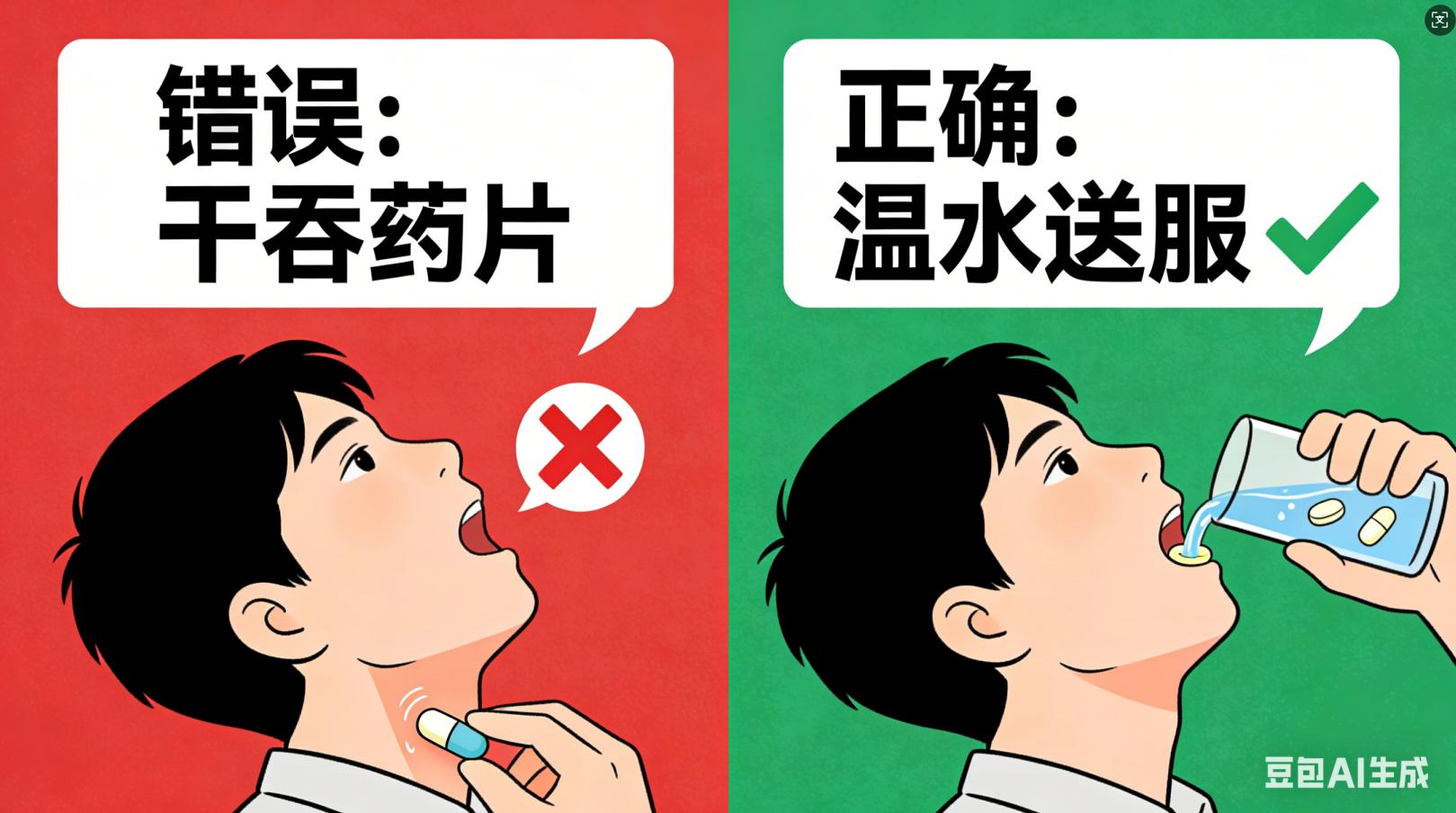
Regular tablets: Correct administration is to take with warm water, 1–2 tablets at a time; plain explanation: do not swallow dry! Warm water helps the tablet slide into the stomach; absolutely do not do: do not swallow on an empty stomach without water (can lodge in the esophagus).
Dispersible tablets: Correct administration is to dissolve in warm water before taking, or chew and swallow directly; plain explanation: a boon for those with difficulty swallowing; absolutely do not do: do not take dry (poorly absorbed).
Enteric-coated tablets (e.g., aspirin): Correct administration is to swallow the tablet whole, take after meals; plain explanation: the coating protects from stomach acid, taking after meals is gentler on the stomach; absolutely do not do: do not split or chew.
Sustained-release / controlled-release tablets (e.g., antihypertensives): Correct administration is to swallow the tablet whole and take at a fixed time; plain explanation: they release the drug slowly, one dose covers 24 hours; absolutely do not do: do not crush or split (this can cause a sudden release of drug effect and pose risks).
Sublingual tablets (e.g., nitroglycerin): Correct method is to place under the tongue and let dissolve; plain explanation: for emergency use! Acts within 3 minutes; things you must never do: do not swallow, do not drink water.
Lozenges (e.g., Herba Sarcandra lozenges): Correct method is to hold in the mouth and let slowly dissolve; plain explanation: specifically for sore throat, avoid eating or drinking for 30 minutes after taking; things you must never do: do not chew into pieces, do not swallow whole.
Effervescent tablets (e.g., vitamin C): Correct method is to dissolve in water below 40°C, wait until all bubbles have disappeared before drinking; plain explanation: like a beverage, pleasantly sour-sweet and easy to take; things you must never do: do not swallow directly (may cause choking, risk of asphyxiation).
Oral liquids (dose must be precise!)
Oral liquid (e.g., ibuprofen): Measure with a dosing cup or dropper and take orally; never drink directly from the bottle mouth (it will contaminate the medicine).
Suspensions (e.g., cephalosporins): must be shaken thoroughly before dosing! Otherwise the particles will settle to the bottom of the bottle, causing the administered dose to be inaccurate.
Syrups (e.g., cough syrup): take orally directly; do not drink water immediately after taking (the medicine forms a protective film in the throat, and water will destroy it, reducing the antitussive effect).
Granules (e.g., Ganmaoling): dissolve in warm water before taking; do not ingest dry (dry ingestion can cause choking and is poorly absorbed).
Powder formulations (e.g., montmorillonite powder): mix with warm water into a paste before drinking; ensure the water is not too hot (high temperatures can destroy drug components and reduce efficacy).
Topical medications (apply to the correct site — do not use on the wrong area!)
Ointment (such as erythromycin): The correct method is to first clean the affected area, then apply a thin layer and gently rub until absorbed; key precautions: do not apply too thickly, avoid mucosal areas such as the eyes and mouth.
Eye drops (such as levofloxacin): The correct method is to tilt the head back and drop the solution onto the sclera; after instillation, gently close the eye for 1 minute; key precautions: do not let the bottle tip touch the eye or eyelashes, and after instillation press the inner canthus (to prevent the drug from draining through the nasolacrimal duct and reducing effectiveness).
Ear drops (such as ofloxacin): The correct method is to warm the ear drop bottle in your hand first (to avoid cold solution irritating the ear), then turn the affected ear upward, gently pull the auricle to straighten the ear canal, and after instillation maintain this position for 5–10 minutes; key precautions: clean the ear canal before use to avoid the solution being blocked by cerumen and unable to exert its effect.
Nasal drops (such as oxymetazoline hydrochloride): The correct method is to tilt the head back and instill the solution into the nasal cavity, maintain the head-back position for several minutes before returning to upright; key precautions: limit the frequency of use and do not use long term (may cause rebound congestion and worsening nasal obstruction).
Nasal sprays (e.g., mometasone furoate): Correct use is to keep the head in a natural position, move the nozzle toward the inner side of the nasal cavity, and gently press to spray; key precautions: do not blow your nose or speak immediately after spraying to allow the medication to be fully absorbed.
Suppositories: Correct use is to insert into the rectum or vagina about 2 cm deep; key precautions: you can refrigerate for a few minutes before use to harden it for easier insertion, and do not defecate immediately after use (to avoid expelling the medication).
Patches (e.g., analgesic patches, antiemetic patches): Correct use is to apply to clean, dry skin; key precautions: antiemetic patches are applied behind the ear or at the Neiguan (PC6) point, and do not apply skincare products or ointments before use (they can affect adhesion).
Lotions (e.g., calamine lotion): Correct use is to shake well and apply to the affected area; key precautions: some lotions need to be diluted before use, clean the affected area before application, suitable for people with sensitive skin and infants.
Tinctures (e.g., compound fluocinolone acetonide tincture): the correct use is topical application to the skin; key precautions: avoid broken skin and sensitive areas, orally administered tinctures should be taken with a small amount of warm water, and strictly adhere to the prescribed dose.

3. Key points for taking special pharmaceutical dosage forms
1. How to take traditional Chinese medicine dosage forms?
Decoctions: choose the method of administration according to the condition — divided doses (take in 2–3 equal portions), single dose (take all at once), frequent dosing (small amounts several times), continuous dosing (consecutive administration over a short period); tips: for cold-pattern conditions, take warming herbs warm; for heat-pattern conditions, take cooling herbs cold.
Pill formulations (e.g., Liuwei Dihuang Wan): take with warm boiled water; swallow small pills whole, chew or break large honey pills into smaller pieces before taking; characteristics: slow release of drug components, suitable for long-term use in chronic diseases.
Capsule formulations (e.g., cod liver oil softgel): swallow whole, do not open the capsule; reason: the capsule shell masks bitterness and protects the drug from being destroyed by stomach acid.
Powder formulations (e.g., Angong Niuhuang Wan): mix into a paste with warm boiled water, white liquor, or vinegar before taking; suitable for patients who cannot swallow or for children.
Droplet pills (e.g., Compound Danshen Dripping Pills): can be held sublingually or taken with warm water; tip: sublingual administration is more effective, promotes absorption, and allows for local slow release of the drug effect.
2. Correct Use of Aerosol Inhalers
For inhaled aerosols (e.g., budesonide for asthma): steps are shake the canister well → remove the cap → exhale deeply → seal the lips around the mouthpiece → spray while inhaling deeply → hold breath for 10 seconds; key point: breath-holding allows the medication to remain maximally in the trachea and bronchi, improving efficacy; children or severely ill patients may use a spacer (holding chamber) to facilitate easier inhalation.
Topical aerosols (e.g., for treating cutaneous fungal infections): shake well and spray onto the affected area from a distance of 10–15 cm, spray evenly then pat lightly until absorbed; key point: avoid mucous membranes such as the eyes and mouth.
4. General Medication Advice (Everyone Should Remember!)
1. Timing of Medication and Food
Timing rules: “take before meals” = 30 minutes before eating; “take after meals” = 15–30 minutes after eating; “take on an empty stomach” = 1 hour before meals or 2 hours after meals.
Tips for traditional Chinese medicine: take tonifying medicines before meals, yin-nourishing medicines at night, yang-tonifying medicines before noon; for regulating menstruation take medicines before or during menses; for dysmenorrhea due to liver qi stagnation, take soothing liver medicines 3–5 days before the expected menses.
Dietary contraindications: Never take medications with tea, fruit juice, or milk! Tannins in tea affect absorption of iron and calcium supplements; organic acids in fruit juice reduce the stability of some antibiotics; calcium ions in milk affect the efficacy of certain drugs (for example, do not drink tea when taking iron supplements, and do not drink milk when taking tetracycline antibiotics).
2. Dosage and frequency of administration
Core principle: Strictly follow the package insert or physician’s orders; do not arbitrarily increase or decrease the dose or change the dosing frequency.
Dose adjustment: For children calculate by weight or body surface area (do not simply halve the adult dose); elderly doses are generally reduced to 50% of the adult dose (especially for drugs that affect liver or kidney function).
Long-term medication: Regularly recheck liver and kidney function and complete blood counts, and adjust medications based on the results (for example, some antibiotics require dose and dosing-interval adjustments according to renal function).
3. Drug Interactions and Contraindications
Combination therapy: If you can take one drug, avoid taking multiple to reduce the risk of adverse reactions (for example, combined use of amoxicillin and probenecid can increase nephrotoxicity, and combining with tetracyclines can affect bactericidal efficacy).
Incompatibilities: Some drugs should not be used together (for example, salbutamol and propranolol used together may worsen asthma).
Expired drugs: Do not use! Store after opening according to the instructions; ophthalmic drops should be used within 28 days after opening (expiration may encourage bacterial growth).

5. Medication precautions for special populations
1. Pediatric medication
Dosage: Calculate based on age, weight, or body surface area; do not arbitrarily increase or decrease (for example, ibuprofen granules must be dosed by weight and reconstituted with water proportionally).
Dosage forms: Do not give tablets or capsules to children under 3 years old; choose syrups, suspensions, or other liquid formulations; for drops, administer directly into the mouth or with a small amount of water (avoid aspiration into the airway).
Note: Parents should read the instructions carefully. Effervescent tablets must be completely dissolved before giving them to the child, and topical patches should be applied gently (to avoid damaging delicate skin).
2. Medication for pregnant women
Core: Avoid drugs harmful to the fetus, categorized as use with caution (avoid if possible), contraindicated (generally not used), and absolutely prohibited (never used).
Contraindicated drugs: tetracyclines (cause fetal malformations, dental damage), aminoglycosides (cause fetal deafness), sedative-hypnotics (cause fetal brain development malformations), anticancer drugs (cause fetal malformations or death), hormonal agents (cause fetal reproductive organ malformations).
Recommendation: Whenever possible choose safe medications; if drugs are necessary consult a physician and strictly control dosage and duration.
3. Medication Use During Breastfeeding
Key point: Many drugs pass into breast milk and enter the infant (infants have immature metabolism, so even small amounts may have effects).
Contraindicated drugs: Chloramphenicol (causes "gray baby syndrome"), tetracyclines (cause infant tooth damage), aminoglycosides (cause infant hearing impairment), methimazole (suppresses infant thyroid function), corticosteroids (cause infant jaundice).
Recommendation: Choose medications with a high safety profile; pause breastfeeding when using contraindicated drugs; consult a physician before medication use.
4. Medication use in the elderly
Dosage: Usually reduced to 50% of the adult dose (in cases of hepatic or renal impairment, drugs may accumulate).
Dosage form: Choose liquid formulations or tablets that can be broken, avoid complex manipulations (for drops, choose those with a dropper for ease of use).
Note: Do not overuse tonic medicines or hypnotics (start hypnotics at low doses to avoid dependence); for poor memory, make medication cards (intuitive and easy to remember); rest briefly after taking medication to observe reactions.
5. Medication use in patients with hepatic or renal dysfunction
Core: Avoid drugs that are metabolized by the liver or kidneys or are hepatotoxic/nephrotoxic (for example, aminoglycoside antibiotics are harmful to the kidneys, aspirin affects the liver and kidneys).
Contraindications for traditional Chinese medicines: patients with hepatic insufficiency should avoid lead-based cinnabar, realgar, and cinnabar (zhu sha); patients with renal insufficiency should avoid drugs containing aristolochic acid and cinnabar (zhu sha).
Recommendation: Strictly control dose and course of treatment, monitor liver and kidney function regularly, and adjust the dose of certain drugs based on parameters (for example, reduce the dose of some drugs in severe hepatic impairment).
6. Common medication misconceptions and correct practices (pitfall avoidance!)
Misconception: Swallowing tablets dry → Correct approach: Take with warm water; if the tablet is too large it can be broken in half with the doctor’s permission (scored tablets are easy to split), to avoid lodging in the esophagus.
Misconception: Arbitrarily breaking or chewing sustained‑release or enteric‑coated tablets → Correct approach: Must be swallowed whole; breaking or chewing destroys the structure, causing early drug release and adverse reactions (for example, chewing nifedipine controlled‑release tablets may cause a sudden drop in blood pressure).
Misconception: Swallowing effervescent tablets directly → Correct approach: Dissolve in water below 40°C and drink after the bubbles disappear; swallowing them directly may cause suffocation or gastric injury.
Misconception: Arbitrarily increasing the volume when taking granules or powders → Correct approach: Reconstitute with water according to the package instructions, for example, montmorillonite powder should be mixed with 50 mL of warm water; too much or too little water affects efficacy, so do not change the volume arbitrarily.
Misconception: Ignoring the posture when taking medication → Correct practice: For ear drops, have the affected ear facing upward and lie down for 5–10 minutes after instillation; for nasal drops, tilt the head backward and maintain the position after instillation; for aerosol inhalers, shake well, inhale deeply, and hold your breath for 10 seconds (to prolong drug residence time).
7. Conclusion
Correct medication use is key to ensuring therapeutic effectiveness! Different dosage forms have specific methods of administration, and special populations must be even more cautious with medications. Remember, drugs are tools to treat disease, not 万能. Follow medical advice when using medications, have regular follow-ups, and ask your doctor or pharmacist promptly if you have questions so that drugs can 发挥最大作用 and protect your health!