Child recovered from influenza but the school insists on a negative test? Doctor teaches you the smartest way to handle it
Recently, many parents have run into the same annoyance: their child had influenza, the fever has subsided, and their energy is back — they’re practically ready to return to school. But the school sent a notice requiring a “negative influenza virus” test report before the child can resume classes.

What should you do? Do you have to take your recently recovered child to the hospital to wait in a long line for testing? Don’t worry — let’s thoroughly explain this matter and give you the most time-, effort-, and worry-saving solution.
Core recommendation: Get an "antigen test"; under no circumstances get a "nucleic acid test"!
1. What are the scientific criteria for returning to school?
First, we need to clarify one key point: according to scientific criteria for returning to school, a negative test report is actually not required.
When doctors judge whether a child can return to school, they mainly look at three points:
Normal body temperature: Body temperature has been completely normal for more than 24 hours without the use of antipyretics.
Sufficient course of illness: Approximately one week has passed since onset.
Recovery of mental state: The child feels that their energy has returned and is able to engage in normal learning activities.
As long as the above conditions are met, it indicates that the virus in the child's body is basically no longer infectious, and they can safely return to school. A physician can also reasonably issue a return-to-class certificate based on these conditions.

2. The school insists on a certificate — what should I do?
Ideals are noble, but in reality, school regulations can sometimes be stricter. If the school explicitly requests a “negative report,” we should not confront them head-on. At this point, choosing the correct testing method becomes crucial.
Core recommendation: get an “antigen test,” and under no circumstances get a “nucleic acid (PCR) test”!
Why is there such a big difference between the two? Let’s use an analogy:
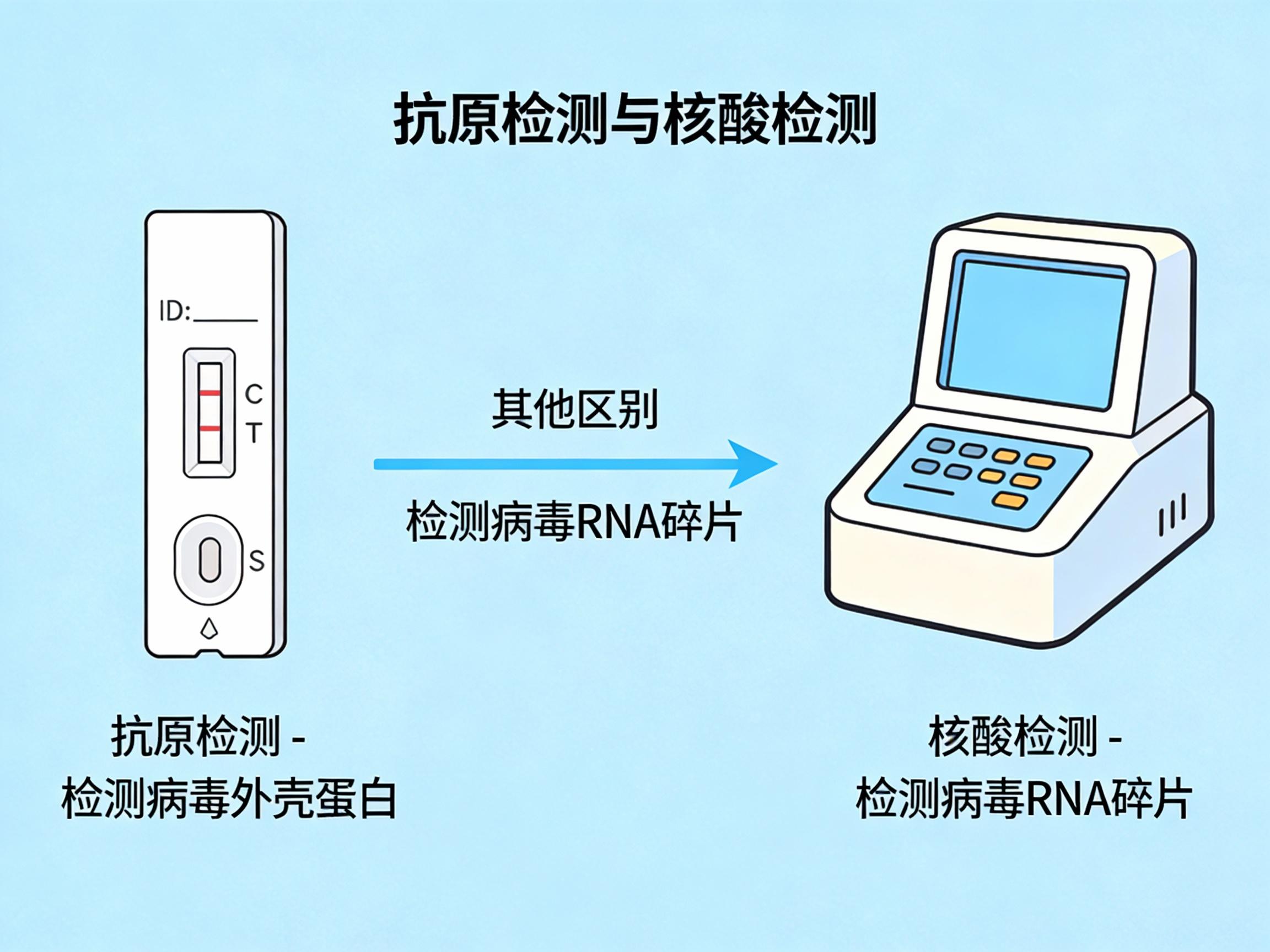
Antigen testing is like catching a "perpetrator in the act" at a crime scene. It detects the virus's "surface proteins." When a child recovers and the active virus in the body has been mostly cleared, the "perpetrator in the act" is gone, and the test naturally turns negative. This time point is usually on days 5 to 7 after symptom onset.
Nucleic acid testing is like searching for the "criminal's DNA fragments" at a crime scene. It detects the virus's genetic material (RNA). Even if the virus has been eliminated by the immune system, these "RNA fragments" may remain in the respiratory tract for a long time, causing tests to stay positive.
3. Why is antigen testing strongly recommended instead of nucleic acid testing?
Antigen testing: very likely to "pass"
Doing an antigen test (usually a nasal swab) about a week after the child has recovered makes it very likely the result will turn negative. That way you can easily obtain a negative report and satisfy the requirement.
Nucleic acid testing: easy to "fall into a trap"
。
Scientific studies show that after recovery from influenza, nucleic acid test results can remain positive for weeks or even longer. Some studies indicate that healthy children can still test positive by nucleic acid testing 70 days after infection with influenza A! But at that point the positive result is only fragments of the virus "corpse" and is completely noninfectious.
If you test your child with nucleic acid (PCR) on the 6th or 7th day after recovery, the result is likely to be positive. The school may therefore refuse to allow the child to return, and you would have to bring the child back for another test a few days later—wasting time and money and putting unnecessary strain on a child who has just recovered.
Brief summary:
Objective: Obtain a negative report so the child can smoothly resume classes.
Best option: One week after symptom onset, perform an antigen test. It reflects current infectivity; a negative result reliably indicates "safety."
Avoid the pitfall: avoid doing nucleic acid testing. It is overly sensitive and can remain positive after recovery, causing you unnecessary trouble.
Final tips for parents:
Next time you encounter this situation, calmly communicate with the school, try to explain the difference between antigen and nucleic acid tests, and state that scientifically the disappearance of symptoms is the standard for returning to class. If communication fails, then to get your child back to school as quickly as possible, be sure to remember our advice: test with antigen, do not test with nucleic acid. This is the wisest and most efficient solution.