One moment on your phone, seven major organs quietly injured!
That "little companion" you carry with you at all times is quietly harming you when you are most unguarded.
Taking your phone to the toilet—playing games, scrolling social feeds, watching videos—for as little as ten minutes or as long as half an hour is the toileting portrait of many people. While you secretly enjoy it, you may never have thought that this habit is harming you from head to toe.
。
Clinicians have even treated a 33-year-old man who, after playing on his phone while squatting over a toilet for 2 hours, suffered a sudden 13 cm protrusion of his intestine and was diagnosed with the most severe third-degree rectal prolapse.

01 Brain and nerves
When you sit on the toilet and scroll on your phone, your brain is quietly being overtaxed. Using a phone while squatting in the toilet unconsciously prolongs the time, making blood flow downward and causing insufficient cerebral perfusion. That is why standing up suddenly after prolonged squatting can cause dizziness and a sense of lightheadedness.
Toilets are one of the locations with a very high sudden death rate; spending too long on the toilet can sharply increase the risk. Some patients with originally well-controlled cardiovascular and cerebrovascular diseases, because they play with their phones in the toilet for extended periods, experience elevated blood pressure and insufficient cerebral blood supply, which can trigger acute myocardial infarction, stroke, or even sudden death.
Not only is cerebral blood supply affected, but cognitive function can also be impaired. Using a phone while on the toilet is meant to be recreational, but it plunges people into a continuous “multitasking” state; over time this can lead to psychological problems such as “attention disorders.” A large amount of ineffective information enters the brain, weakening its ability to process useful information and ultimately causing memory decline.

02 Hidden damage to the eyes
“The lighting in bathrooms is generally dim and is not suitable for viewing any electronic devices,” emphasized Tan Xingping, Deputy Chief Technician, Ophthalmology, Xiangya Hospital, Central South University. He noted that this is especially true for children: looking at a phone at close range while on the toilet keeps the eyes in a constant state of tension and strain, preventing adequate rest and thereby increasing the risk of myopia.
The problem is equally serious for adults. When staring at a screen for a long time, a person’s blink rate can decrease by one-third, causing more tear evaporation from the ocular surface and leaving the eye insufficiently lubricated. Tear evaporation is one of the main causes of dry eye, which can ultimately lead to permanent eye damage.
In the dim toilet environment, the contrast in brightness between the phone screen and the surroundings is huge; using the eyes at such close range keeps them constantly strained, which in turn causes eye fatigue and vision damage.
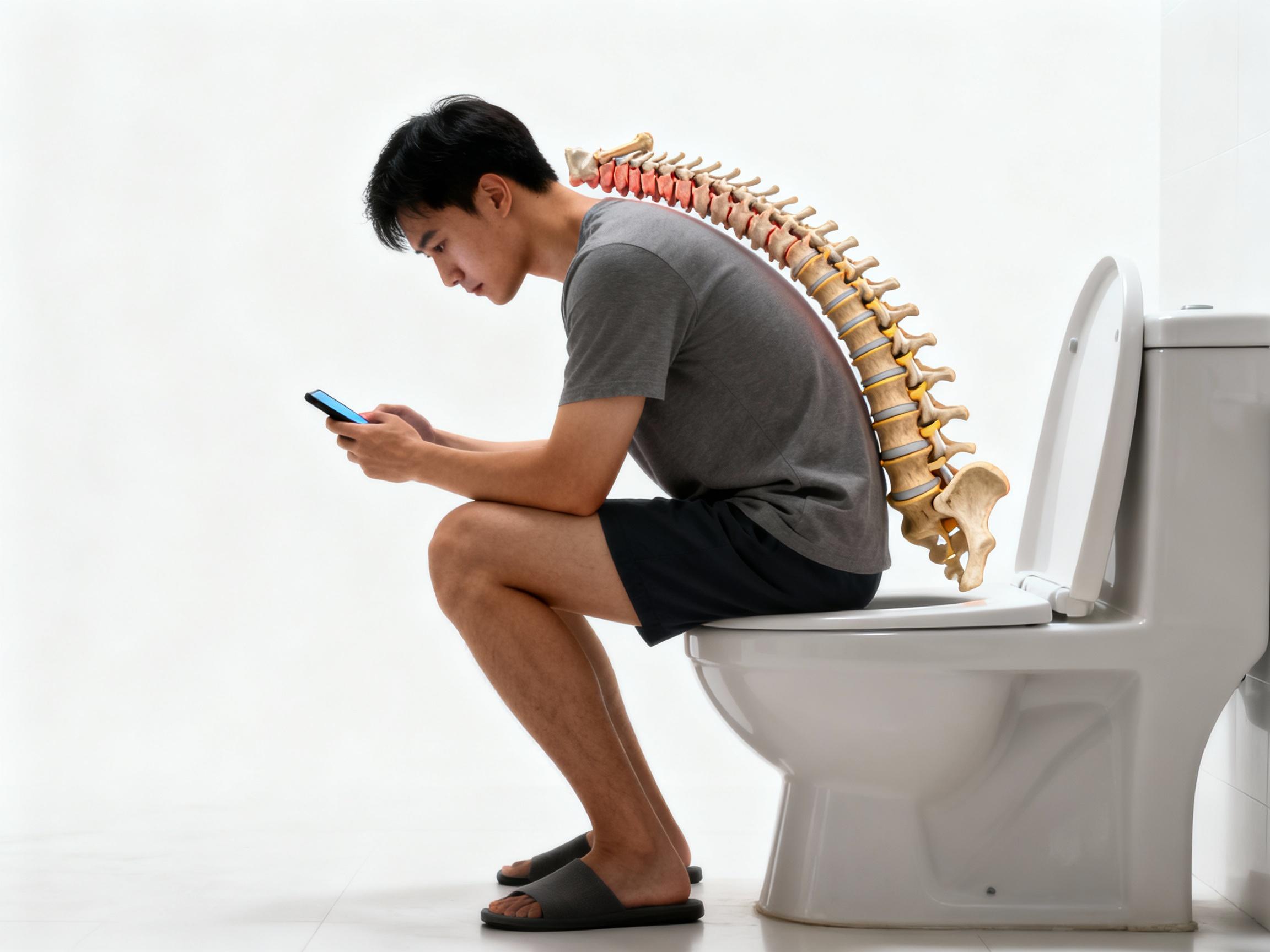
03 The heavy burden on the cervical and lumbar spine
"Prolonged looking down at your phone is an important reason for the younger onset of cervical spondylosis," said Hu Yihe, chief orthopedic physician at Xiangya Hospital, Central South University. He explained that when using the toilet, the body unconsciously leans forward, increasing pressure on the cervical spine, causing changes in cervical flexion and making cervical disc herniation and cervical instability more likely.
Especially with squatting toilets, the lumbar spine lacks sufficient support, altering its natural curvature and increasing the gravitational load on the intervertebral discs; over time this can induce lumbar disc herniation. Playing with a phone while on the toilet causes the body to unconsciously lean forward, multiplying the pressure on the cervical spine.
This incorrect posture not only affects the cervical spine but also burdens the entire spinal system. Jiang Yiqiu, associate chief physician of the Sports Joint Department at Nanjing First Hospital, pointed out that this can easily lead to a series of problems such as cervical disc herniation, cervical instability, or lumbar spine degeneration.
04 Fatal risks to the cardiovascular and cerebrovascular systems
"Toilets are one of the locations with a very high rate of sudden death," said Mo Long, chief physician of the Department of Cardiology at Xiangya Hospital, Central South University, citing a laboratory finding: during defecation, cerebral arterial pressure can increase by more than 20 mmHg.
For people who already have cardiovascular or cerebrovascular disease, the increase in myocardial oxygen demand can precipitate angina, myocardial infarction, and severe arrhythmias; a sudden rise in blood pressure can cause cerebral vessel rupture and hemorrhage—either of which may lead to sudden death.
People with generally weaker constitutions also have poorer vascular regulatory responses. Spending a long time looking at a phone while on the toilet, or suddenly standing up after prolonged squatting, can easily cause transient cerebral ischemia, resulting in orthostatic hypotension–related fainting or even cerebrovascular accidents.
For patients with cardiovascular or cerebrovascular disease, do not strain excessively during defecation; when you feel the urge, try to go if you can, but do not force it if you cannot. After finishing, rise slowly to avoid accidents.
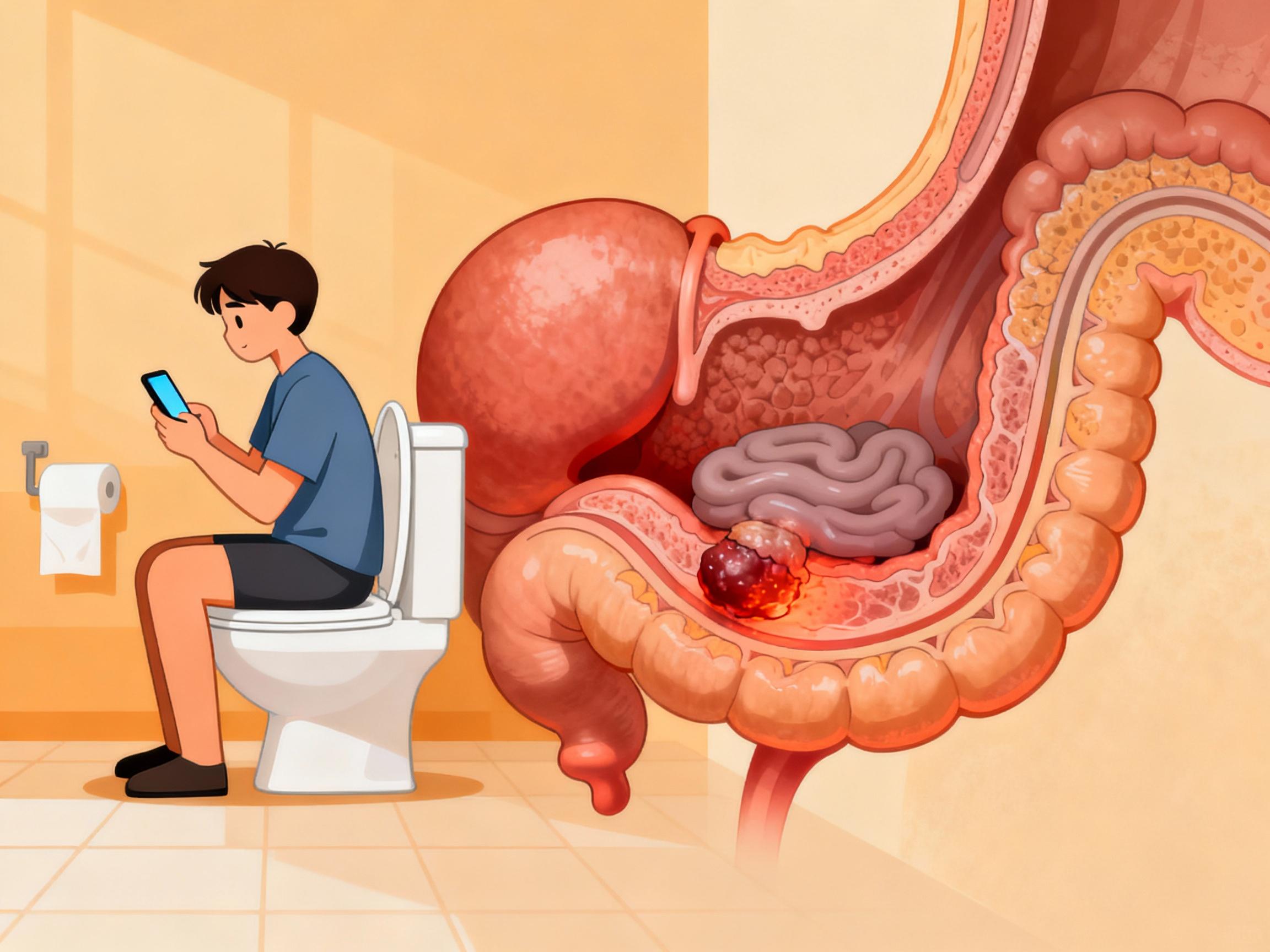
05 The Unbearable Burden on the Anorectal Region
Clinical evidence now confirms a causal relationship between prolonged toilet sitting and hemorrhoids. Even in the absence of constipation, prolonged defecation habits while squatting on the toilet—such as playing with a phone or reading a newspaper—can likewise promote the development of hemorrhoids.
Gong Liansheng, chief physician of the Hepatobiliary and Colorectal Surgery Department at Xiangya Hospital, Central South University, explains that there are two main reasons: first, downward displacement of the anal cushion. Prolonged elevation of intra-abdominal pressure can weaken the elastic recoil of the anal cushion, causing it to lose its original support and descend, forming hemorrhoids. Second, venous varicosity. Prolonged squatting on the toilet, under the combined pressure of gravity and intra-abdominal organs, impedes rectal venous return, leading to venous congestion and dilation, forming hemorrhoids.
Using a phone on the toilet not only triggers hemorrhoids but can also cause constipation. When attention is drawn to phone content, it inevitably distracts from the act of defecation, causing the urge to defecate to be delayed or to disappear. Defecation is one of the muscle reflex actions in which the central nervous system participates; playing with a phone interferes with the brain’s neural control of defecation, prolongs the time spent on the toilet, and over time leads to difficulty in defecation or habitual constipation.
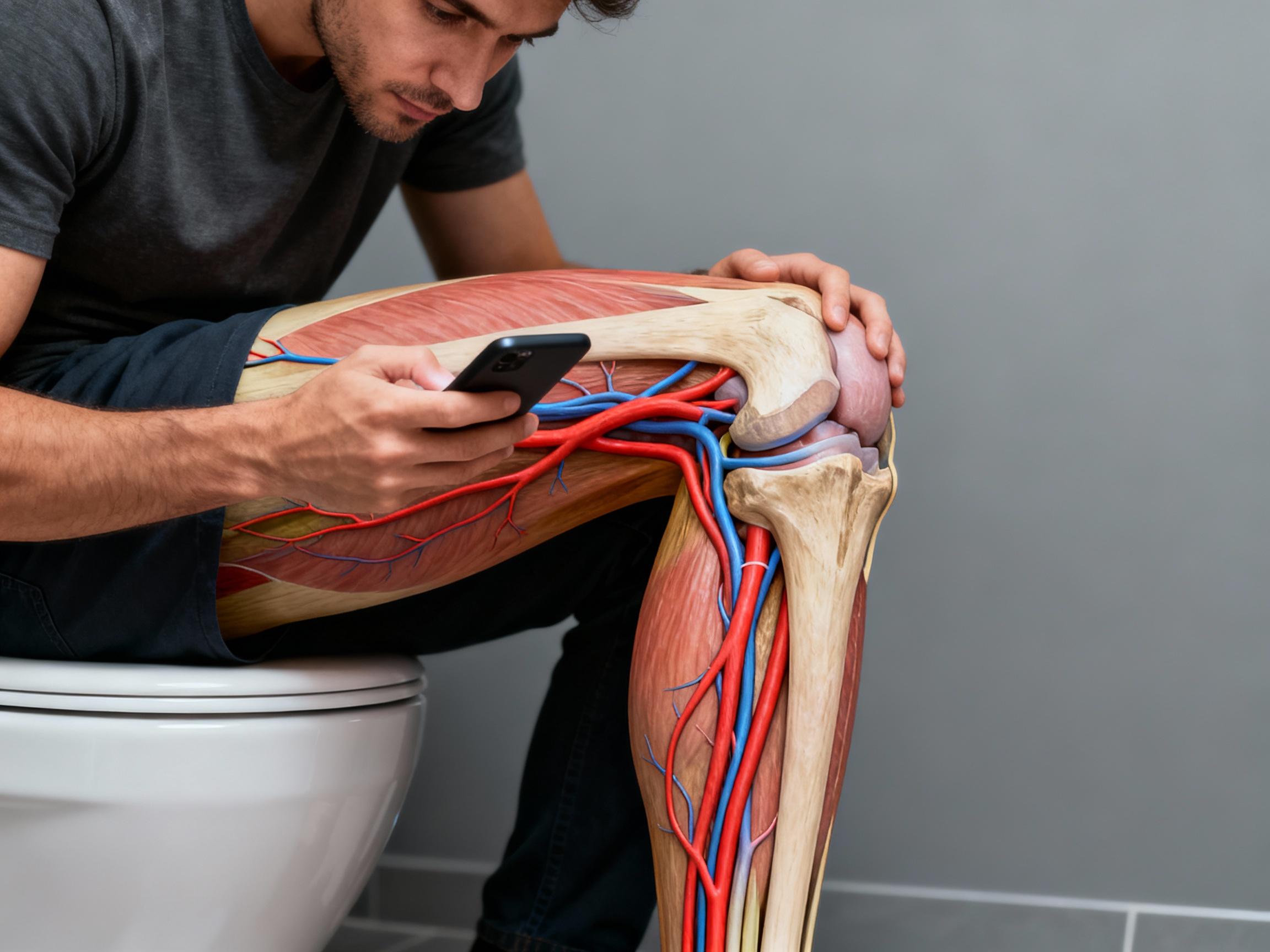
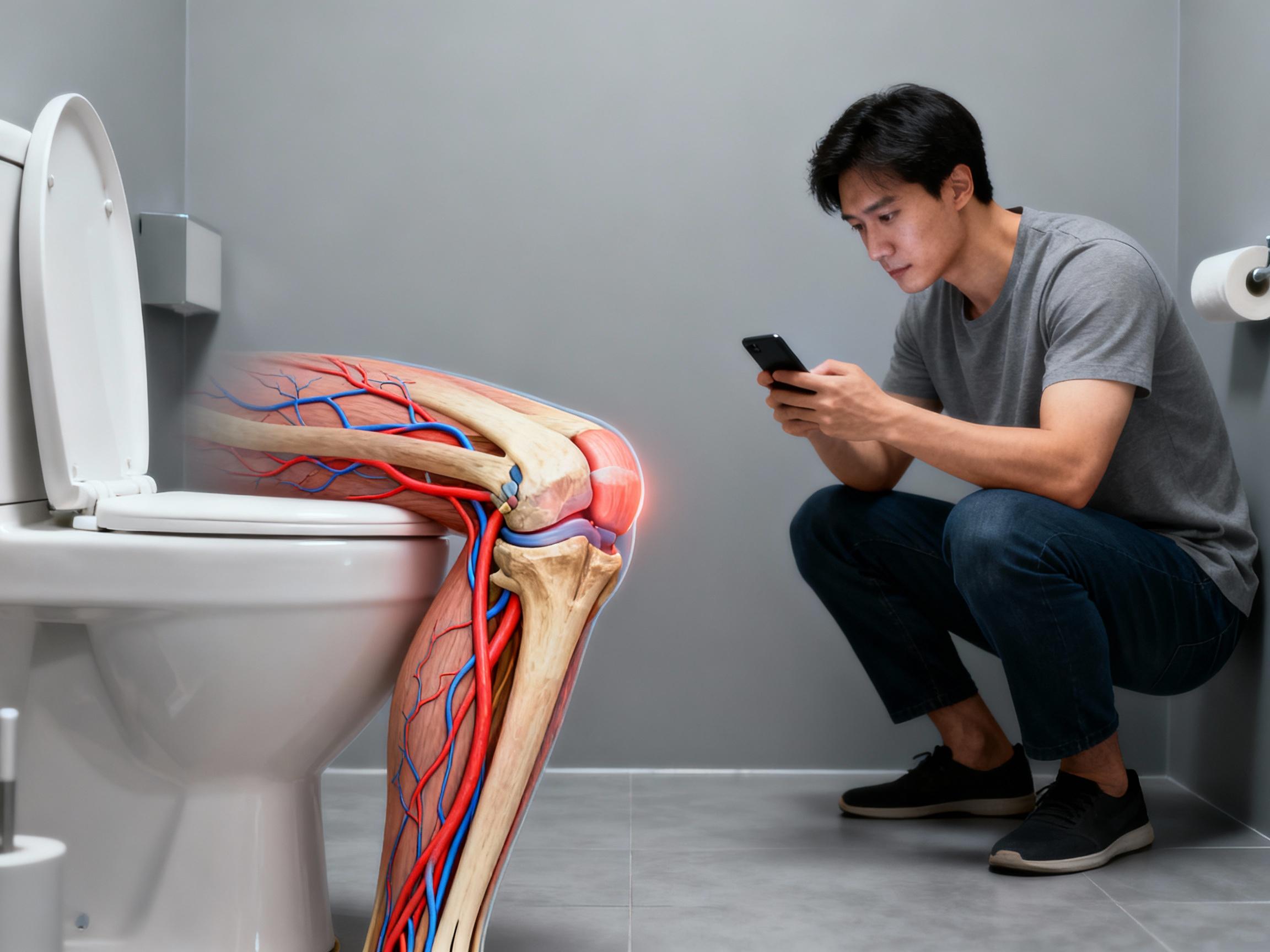
06 Knee Joint and Lower Limb Vessels
The knee joint is the most load-bearing and most active joint in the human body; when a person squats, the load on the knee joint is 3–6 times body weight. All joints are connected by connective tissue ligaments; ligaments are at the ends of muscles and have relatively poor blood circulation. After prolonged squatting, the medial and lateral ligaments bear the greatest force, increasing the burden on the joint and ligaments.
For those who already have degenerative changes, it is recommended not to squat for long when using the toilet; it is best to choose a seated toilet.
Lower limb vessels face similar risks. Huang Jianhua, chief physician of Vascular Surgery at Xiangya Hospital, Central South University, explained that venous return from the lower limbs relies on muscle contraction to assist. When squatting on the toilet looking at a phone for more than 15 minutes, the muscles remain inactive for an extended period, contractions slow accordingly, causing venous blood flow velocity to decrease, which can easily lead to leg swelling and numbness.
If this bad habit is maintained frequently, it can also lead to lower limb venous thrombosis. If it is deep vein thrombosis of the lower limbs, it may be fatal. People who already have endothelial cell damage, a tendency for blood to clot, obesity, hyperlipidemia, or are over 40 years old should pay particular attention.
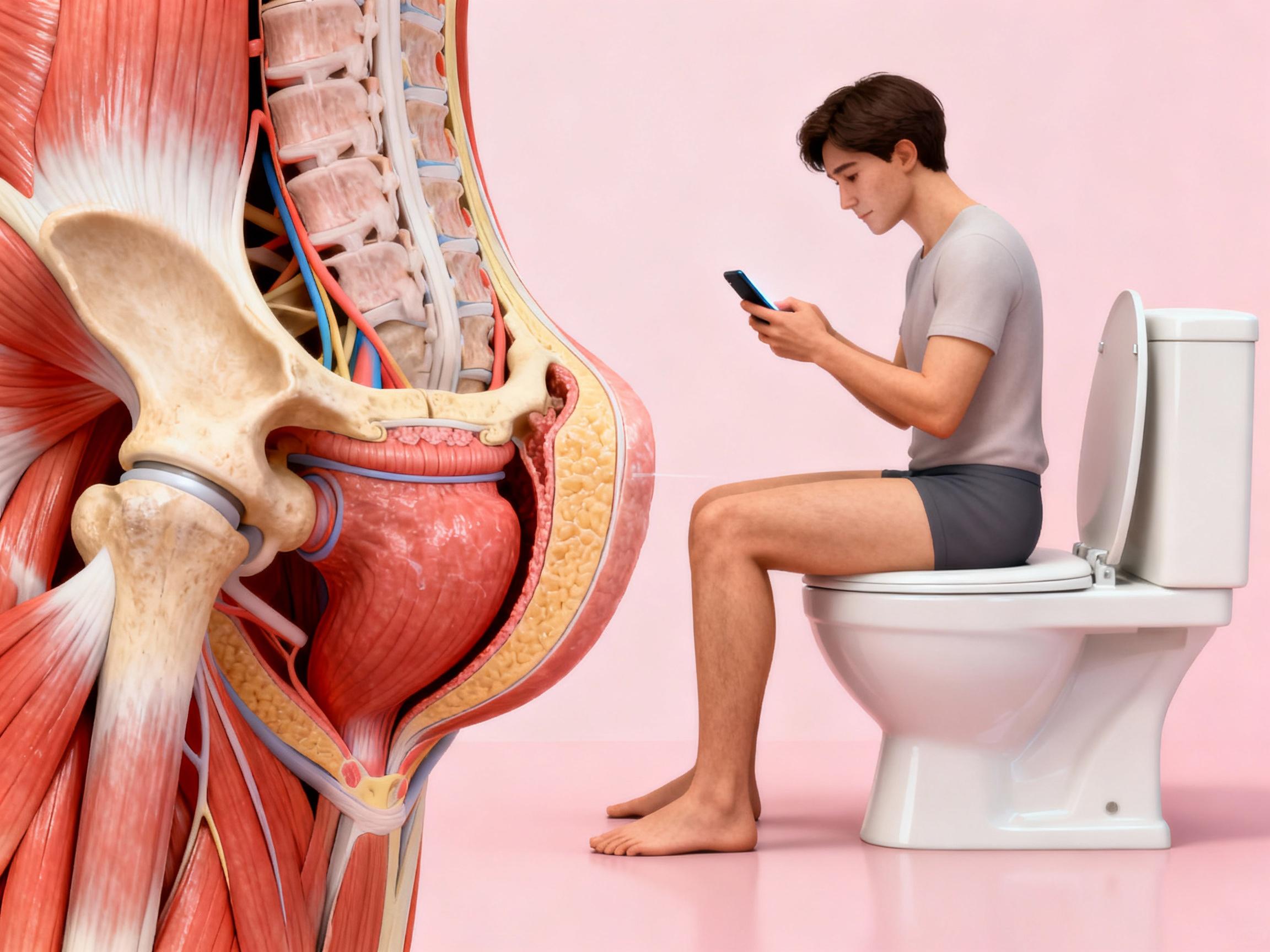
07 Relaxation of the pelvic floor muscles
In addition to the harms described above, long-term toilet use while playing on a phone can also cause significant damage to the pelvic floor muscles. When a 20-year-old woman’s pelvic floor condition already resembles that of a 60-year-old, we must face this problem.
Prolonged squatting or sitting on the toilet can lead to relaxation of the pelvic floor muscles, especially in women; this may precipitate more serious health problems such as stress urinary incontinence and pelvic organ prolapse.
Prolonged defecation time causes a sustained increase in intra-abdominal pressure, which directly acts on the pelvic floor muscles, causing these muscles to gradually relax and their supportive function to weaken. For women, pelvic floor muscle health is crucial; it functions like a "hammock," supporting pelvic organs such as the bladder, uterus, and rectum.
Doctors recommend keeping defecation time within 3–5 minutes. When feces accumulate to a certain volume, they stimulate the rectum and transmit signals to the cerebral cortex to produce the defecation reflex. Normal defecation requires only 3–5 minutes; if there is no urge after more than 5 minutes, one should get up immediately and wait until the sensation returns before going to the toilet.
Patients who already have hemorrhoids should shorten the time spent on the toilet, advised not to exceed 3 minutes. After each bowel movement, it is best to consistently perform a warm water sitz bath and clean the anus; this can prevent growth of perianal bacteria and is an effective method to improve hemorrhoids.
Starting today, when you go into the bathroom, you might consider leaving your phone outside. This small change could make your body thank you in the future.