Why do symptoms of frequent and urgent urination persist after an unprotected encounter?
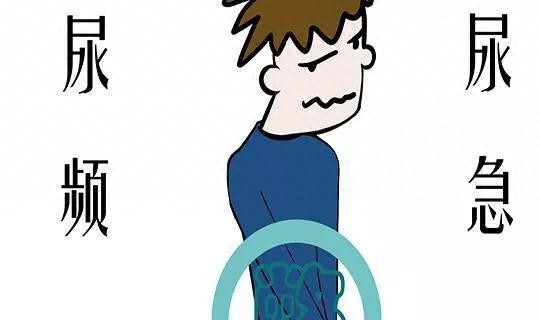
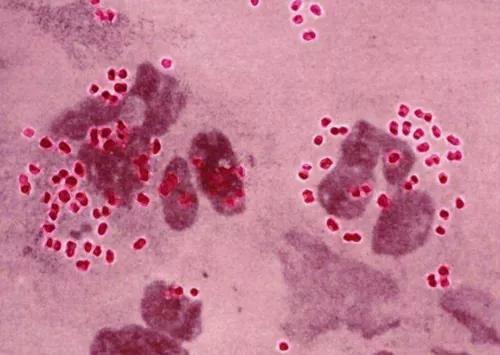
Lao Chen is 43 years old and comes from a rural area in Anhui. His wife stays home to look after the children, while Lao Chen works year-round at construction sites in Wuxi, meaning he only sees his wife during the Spring Festival and other holidays. About a year ago, driven by a moment of unbearable loneliness and encouraged by his coworkers, he had an unprotected sexual encounter. Initially, he felt nothing, but by the third day, he developed clear symptoms of frequent and urgent urination, a stinging sensation at the urethral opening, and purulent discharge. He visited a hospital near his construction site, where a smear test of the discharge revealed Gram-negative diplococci. The doctor informed Lao Chen that he had contracted gonorrhea and recommended antibiotic treatment. He subsequently used numerous antibiotics repeatedly, including cephalosporins, levofloxacin, azithromycin, and minocycline; he cannot even remember how many types he took, and his usage was irregular. While the medication was effective at first, its impact became less noticeable over time. However, he never felt fully recovered, as symptoms of frequent and urgent urination persisted. This has caused Lao Chen great distress—it has been a year now, and he wonders if this condition will ever be cured.
In fact, looking at Lao Chen's entire disease progression and medication history, the diagnosis is completely accurate. As long as Gram-negative diplococci are found in the discharge, combined with a typical history of unprotected sexual contact, a diagnosis of gonorrhea is fully justified. The onset of symptoms on the third day after contact also perfectly matches the incubation period of gonorrhea. So, was there an issue with the medication? Choosing antibiotics to treat gonorrhea is also the correct approach.
So how can we explain why Lao Chen's symptoms have remained uncured for a year? The analysis suggests the following possible reasons:
1. Pathogen Factors
Gonorrhea is caused by an infection of Neisseria gonorrhoeae, but in many cases, it is not a single-pathogen infection. In other words, besides gonococcus, many other pathogens may be involved in a co-infection, such as mycoplasma, chlamydia, trichomonas, and various viruses. While antibiotics are effective against mycoplasma, chlamydia, and trichomonas, they are ineffective against certain latent viruses.
2. Issues with Standardized Antibiotic Use

Using antibiotics to treat gonorrhea is appropriate, but it is essential to choose the correct antibiotic and use it for the full course and in the proper dosage. One must never start and stop the medication intermittently, as this easily leads to pathogen resistance, which could eventually result in a "no drugs left to choose" scenario. This may also be one of the reasons why Lao Chen's symptoms of frequent and urgent urination have persisted.
3. Comorbidities with other diseases
For men, if symptoms of urinary tract irritation such as frequent and urgent urination persist over the long term, a detailed examination is necessary to rule out the possibility of prostatitis. A single instance of unprotected sexual contact can trigger a recurrence of pre-existing prostatitis.
Therefore, for Lao Chen, further testing is required, including repeated urine cultures and routine cultures of prostatic fluid, to attempt to identify any potential microbial infections. If no pathogenic microorganisms can be detected and antibiotic treatment proves ineffective, traditional Chinese medicine (TCM) may be considered for regulation. For patients of this type, I prefer using a modified combination of Sini San and Daochi San, which yields quite favorable results.
Finally, I would like to remind all male friends to maintain self-discipline and practice safe behavior when away from home; this can help you avoid a lot of unnecessary embarrassment!