Throat symptoms of these four kinds may indicate the thyroid has begun to become cancerous — don’t assume it’s just “internal heat”
At dawn, 65-year-old Aunt Lin frowned again in front of the bathroom mirror. She found that recently she always felt as if something was stuck in her throat, and drinking water and eating were not smooth.
"Maybe I've been eating too much spicy food recently and have heatiness." She comforted herself like that. But weeks passed with no improvement; instead she felt a small hard lump below her neck and her voice became somewhat hoarse. Her family urged her to go to the hospital, but she still hesitated: "If my throat is hoarse, at worst I'll drink more water and take some heat-clearing medicine, it'll be fine soon."
But right after the checkup, the doctor's expression suddenly changed: "Aunt Lin, we need to rule out a thyroid problem." The once-familiar "heatiness" actually hid a deeper health risk. Have you ever had a similar throat abnormality but dismissed it as a minor issue?

In fact, many early symptoms of thyroid cancer lurk in throat discomfort that does not easily raise alarm. Especially the following four changes, which are easily confused with ordinary pharyngitis or "heatiness," leading to delayed treatment.
So what exactly are these four major symptoms? Why are they linked to thyroid cancer? And how should you respond if you find them? Don't worry, read on for health reminders tailored for you and your family.
Don’t take these four major throat symptoms lightly!
Many people’s understanding of thyroid cancer remains at the impression that “it mainly affects women.” In fact, regardless of sex—especially in middle-aged and elderly populations—any appearance of special “throat warning signs” should raise high suspicion. Doctors summarize that the following four throat manifestations very likely indicate thyroid abnormalities or even early cancerous change; do not simply assume they are due to heatiness, pharyngitis, or a common cold.
Sensation of a foreign body in the throat, accompanied by a small hard lump
Frequently feeling like there is something “stuck” deep in the throat, becoming obvious when swallowing, and you may even be able to feel a small, firm, nonmobile lump under the neck (below the Adam’s apple or at the thyroid location). At this time, it is not painful, not itchy, not suppurative, and there is no obvious redness or swelling, yet the sensation persists. This symptom is common with thyroid nodules or tumors causing compression or enlargement, especially when the mass gradually increases in size and its surface becomes irregular—immediate vigilance is warranted.
Hoarseness, difficulty speaking
Voice becomes inexplicably lower and hoarse, persisting for more than two weeks without clear causes such as a cold or pharyngitis. Especially if speaking feels effortful, articulation weakens, and breathing becomes short during speech. This situation may indicate tumor invasion of the recurrent laryngeal nerve (which controls vocal fold vibration), causing abnormal vocal fold movement.
Data show that about 10% of patients with malignant thyroid tumors have early vocal fold problems. Hoarseness is often overlooked, particularly in male patients, who are at higher risk.

Persistent dry cough, unresponsive to treatment
Many people have no sore or itchy throat, no redness or swelling, no fever, yet repeatedly experience an irritating dry cough, the need to clear the throat, and even cough medicines provide no obvious relief.
If the cough persists for more than 2–3 weeks without abating, especially worsening at night or after eating and swallowing. Medical research has found that some thyroid tumors located near the trachea or airway can irritate the tracheal mucosa and produce this intractable dry cough.
Difficulty swallowing, sensation of respiratory compression
A feeling of obstruction or blockage when swallowing food or drinking water, shortness of breath, insufficient air, or needing to take a deep forceful breath to relieve the sensation. If this persists long-term or worsens, it may indicate the mass is compressing the esophagus or trachea. Data show this symptom appears more often in patients with larger tumors or tumors in particular locations.
。
It is noteworthy that these symptoms are often misdiagnosed as "chronic pharyngitis," "recurrent internal heat," or "vocal strain," resulting in delayed detection of the real problem. According to the latest data from the Chinese Anti-Cancer Association, about 200,000 new thyroid cancer patients are diagnosed nationwide each year, of whom more than 80% are women, but men have higher malignancy and faster progression after diagnosis.
Why are these thyroid lesions easily overlooked?
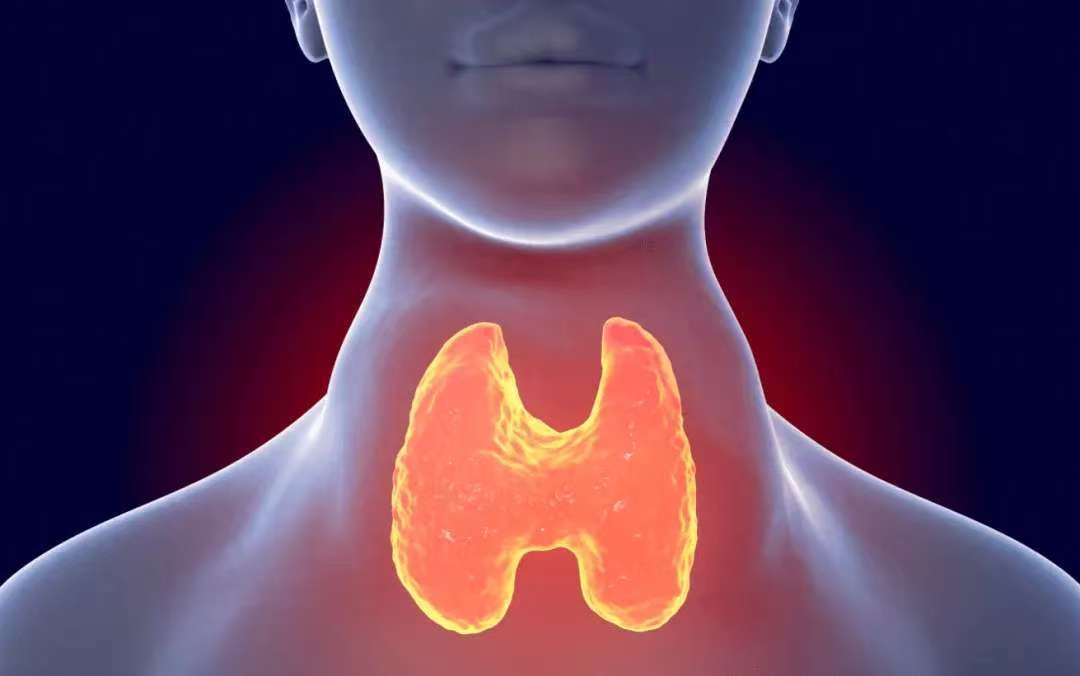
The thyroid is like a butterfly-shaped gland attached to the front of the throat; early abnormalities are more readily detected by endoscopy or ultrasound. Early malignant changes are insidious and are often confused with internal heat or pharyngitis. Over 80% of thyroid nodules are benign, and only a small proportion are cancerous.
Many people have the misconception that "thyroid cancer = gentle cancer": indeed, papillary thyroid carcinoma has a 10-year survival rate exceeding 90%, but some highly aggressive subtypes (such as anaplastic carcinoma and medullary carcinoma) progress rapidly, are asymptomatic in early stages, and when found have often already involved nerves or the trachea, making treatment more difficult.
Experts note that, especially for men, once a nodule is detected—even if very small—it is recommended to complete a biopsy and further examinations as soon as possible. The consensus worldwide is that tumor intervention is "the earlier the better."
How to screen early for thyroid cancer? Seek medical attention promptly if these signs appear!
If you notice any of the four throat abnormalities above or feel a neck mass, it is strongly recommended to promptly visit a local reputable hospital's ENT or endocrinology specialty for evaluation. Modern medical assessment mainly relies on color Doppler ultrasound, thyroid function tests (such as TSH, T3, T4), and the thyroid nodule TI-RADS classification system. For high-risk nodules, fine-needle aspiration biopsy is currently the most authoritative diagnostic method.

In addition, it is recommended to have a neck ultrasound at least once a year, especially for those with a family history of thyroid cancer, long-term exposure to radiation, females, or individuals over 40 years of age. Also avoid unnecessary radiative cosmetic procedures and high-risk work environments. If you experience hoarseness, persistent dry cough, or similar symptoms, do not wait for them to “self-resolve”; seek prompt evaluation.
If diagnosed with thyroid cancer, primary treatments consist of surgery, radioactive iodine therapy, and long-term surveillance follow-up. In recent years treatment modalities have steadily advanced, early-stage cure rates are high, and quality of life is not affected, so the public need not panic excessively.
How to self-examine daily and implement scientific prevention and control?
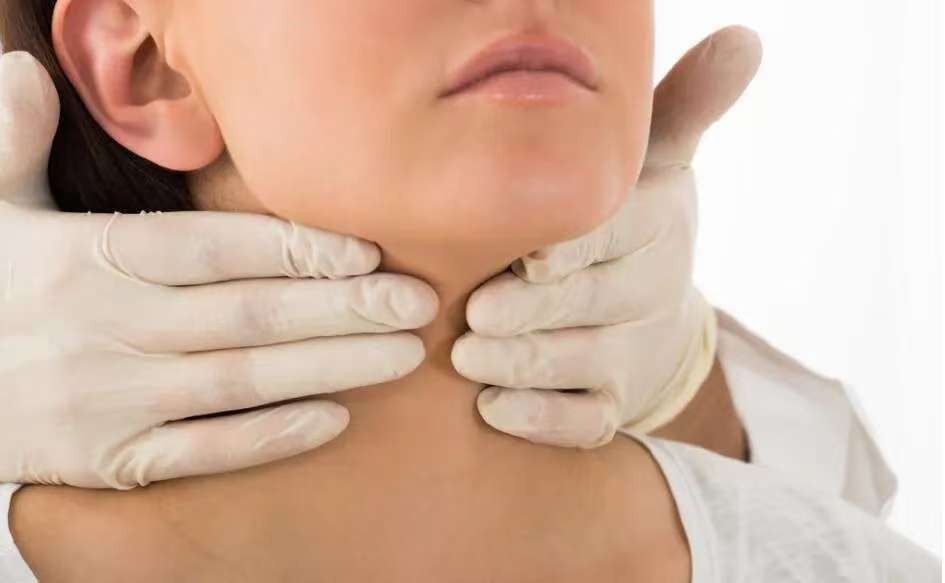
Each time you cleanse your face or look in the mirror, tilt your head down and observe the area below the neck for any abnormal protrusions or asymmetry; gently palpate the thyroid region with your fingertips to see if a firm nodule can be felt; if there are persistent voice changes, cough, or difficulty swallowing, seek medical attention promptly; maintain a balanced diet, appropriate iodine supplementation, regular sleep patterns, and control smoking and alcohol.