Doctor Answers: Is it true that eating vinegar can lower blood sugar?
Is it true that eating vinegar can lower blood sugar?
Is it true that eating vinegar in moderation can lower post-meal blood sugar? What is the principle? How great is its effect? The following answers these three questions separately.
A study article published in the "Journal of Nutrition" in 2020 involved two groups of 15 healthy women who consumed the same amount of rice, with one group consuming 30 milliliters of vinegar and the other not, showing more smooth and stable post-meal blood sugar fluctuations.

The "Chinese Journal of Clinical Nutrition" also reported on related findings, indicating that adding vinegar to the diet can lower the post-meal blood glucose index of subjects.
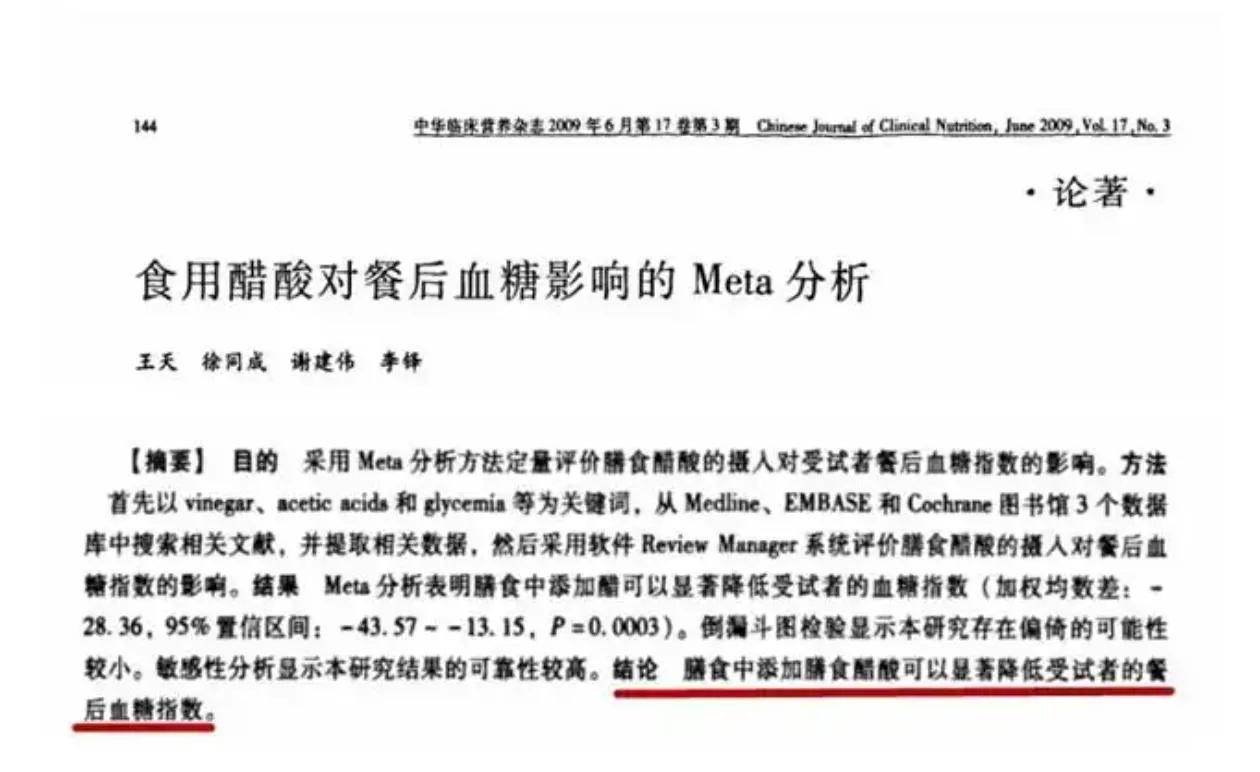
The study also found that the acetic acid component in vinegar can inhibit the activity of amylase, to some extent preventing the conversion of polysaccharides in starch into glucose and slowing down the digestion and absorption rate of sugar. Acetic acid can also prolong the time of gastric emptying, which is beneficial for controlling post-meal blood sugar. Additionally, some animal experiments have confirmed that acetic acid can promote the uptake and utilization of glucose by muscles, although this has not been fully confirmed in humans and should be used for reference only.

How significant is the blood sugar-lowering effect of vinegar? The principle behind vinegar's blood sugar-lowering effect is to prevent the conversion of polysaccharides in starch into monosaccharides.
· For consuming refined grains like white rice, white flour, steamed buns, buns, and dumplings, it is recommended to consume 20-28ml (2~3 tablespoons) of vinegar appropriately, which can help lower blood sugar to a certain extent.
· For consuming coarse grains and whole grain staples, the effect is not significant, as these foods already contain dietary fiber that slows down sugar absorption.
· For drinking sugary beverages, there is basically no effect, as they are primarily composed of simple sugars.
It must be emphasized that vinegar merely serves as an auxiliary function in lowering blood sugar. Dietary control still requires adhering to a low-sugar, low-fat diet. One cannot just eat vinegar and then freely consume other foods.

When choosing vinegar, pay attention to whether it is from a regular manufacturer and whether it meets national execution standards (GB/T19777, GB/T18623 (Special Grade)), with the ingredient list containing only water and natural grains, without any other additives.